United States Navy
As Boothbay Harbor prepares to celebrate the 64th Annual Windjammer Days, this year’s theme proudly honors the past, present, and retired members of the United States Navy who have served our nation with dedication and distinction. Throughout the coming weeks, we will feature a series of profiles highlighting local Navy service members—sharing their stories, experiences, and the lasting impact of their service. These articles are a tribute to the men and women whose commitment to duty reflects the maritime heritage at the heart of Windjammer Days and the deep appreciation of our community.
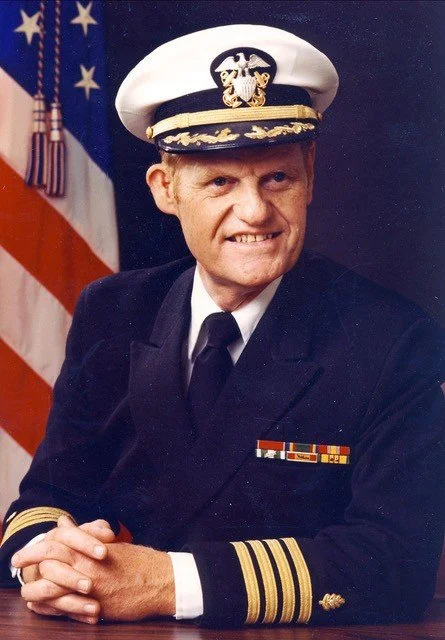
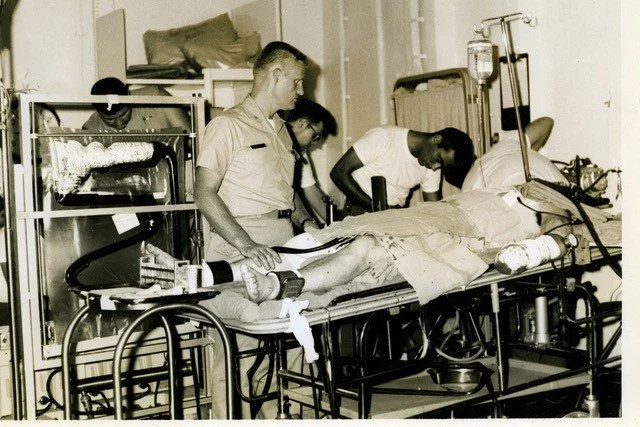
Dr. Barclay M. Shepard Ensign, USNR, United States Maritime Service (Post World War II) and Commander, Medical Corps United States Navy (Vietnam War)
I’ve had the incredible fortune of being at the right place at the right time throughout my 100 years on this earth and some of my greatest memories come from my military experience. I served in the Merchant Marine just after the end of the Second World War aboard an American Export Lines ship from June 1946 thru May 1947, transporting supplies from the United States and to and from various ports in the Mediterranean, Russia, India, Pakistan, and Burma. I sailed aboard the S.S. Coeur d’Alene Victory, one of the many Victory Ships which were built toward the end of World War II to replace the much slower and aging Liberty ships. Each Victory ship was named after a college or university. These were 10,000-ton cargo ships with a horsepower of between 65 and 80 thousand and a speed of between 16 and 18 knots.
I was 3rd Mate aboard ship, and stood the 8-12 watch, morning and night. We crossed the Atlantic many times and on my first voyage I sailed out of New York Harbor. My ship picked up cork, brier (used to make pipes), and pumice from Lipari, which is located north of Sicily in the Aeolian Islands and is where the Stromboli volcano is located. I remember that the water was a beautiful aquamarine color and was very warm so I asked the captain to lower the gangplank so I could go swimming. The water was crystal clear, and I could see the ship’s anchor. Despite the war being over, they were still sweeping mines in the Mediterranean and crews were receiving a moderate hazardous duty pay. At one point, as we approached Trieste, Italy, I saw a mine sweeper explode one of the mines. They had to tow a long line which was carefully set to detonate any mines they encountered.
My second trip was to Odessa, Russia, delivering United Nations Relief and Rehabilitation Administration (UNRRA) goods, which were part of a United Nations relief plan like the United States Marshall Plan for Europe. To reach Odessa, which is located on the north shore of the Black Sea, the ship had to pass through the waterways leading to the Black Sea. The last of these is the Bosphous, which divides the city of Istanbul, Turkey, with Europe to the west and Asia to the east.
It was still early winter, but was unusually cold, and Russian ice breakers had to open a channel so that ships could get to the pier to discharge their cargos. The S.S. Coeur d’Alene Victory tied up next to another cargo ship, the S.S. Mt. Tamalpais. I later found out that the skipper of that ship was the father of a close friend, Dick Banforth, whom I met at Bowdoin College the following year. The cargo we delivered consisted of farm equipment, tractors, and long lengths of large, thin-walled pipe that was designated for a gas line that was to be run from Siberia to Moscow. Curiously, the farm equipment, tractors, and huge coils of heavy manila rope were set aside and soon covered in snow. The only thing the Russians seemed interested in was the pipe.
At the time we were carrying manila rope, which was practically unattainable in the U.S. as almost all supplies of it had gone to the U.S. Navy during the war. After the Russian cargo was unloaded, my ship set out for the trip back to the States. Since the ship was empty with no ballast, the captain took the ship into Oran, North Africa, and 1000 tons of sand ballast was loaded aboard. Shortly thereafter, we hit a hurricane in the mid-Atlantic and it took us six additional days to make port. For me to stay in my bunk, while off watch, I had to tuck one side of my blankets under my mattress!
Finally, we reached Savannah, Georgia, where we unloaded the sand. The ship was brought into a dry dock for inspection. I went underneath the ship and most of the bottom plates had buckled, as the hull was heavily pounded during the storm. Many of these steel plates had to be replaced because they were so badly damaged. There were two holes in two adjacent plates with wires hanging down where the depth finder had once been. I was so impressed by the damage; I took home a small sample piece of the bottom of the ship as a souvenir.
My third voyage was through the Suez Canal, to India, Pakistan, and Burma. While docked in Calcutta, India, I wanted to go into town. This was the period just after the partitioning of India. There were strong tensions between the Muslims and Hindus at that point, as the country was being divided into East and West Pakistan. There was a tremendous shift in the population and many of the Muslims were migrating to Bangladesh or West Pakistan. I clearly remember seeing a huge refugee camp in the City of Madras. The people there were living in sod huts, which had been built one after the other, as far as the eye could see. The refugees with their children were living in squalor, and it was a sad sight that I will never forget.
After leaving the Merchant Mariner service I attended and graduated from Bowdoin College, then followed in my family’s footsteps and pursued a medical degree at Tufts Medical School in Massachusetts. I completed my medical studies, passed my board exams, and became certified as a General Surgeon and later as a Thoracic Surgeon. Duty soon called and in 1967, the Vietnam War was in full swing. I volunteered to serve and was assigned to the U.S.S. Repose AH-16, which was one of two Navy hospital ships serving off the coast of Vietnam. The other was the U.S.S. Sanctuary AH-17. Both ships were based in Da Nang, taking turns steaming up and down the coast of Vietnam during the war.
In October 1967, I flew out to Norton Air Force Base in San Bernardino, California, which is a few miles east of Los Angeles. I then took a charter flight to Da Nang. Navy uniforms are determined by the season, and since my starting point was the northeast coast of the United States in late fall, I wore my dress blues on the plane from Boston. When I finally landed in Vietnam and the airplane door swung open, the oppressive tropical heat hit me all at once, and I realized as I stood on the tarmac that I was probably the only guy in all of Vietnam wearing dress blues!
I remember how confusing Da Nang seemed, and I had to ask a series of people how to get to the hospital ship. No one seemed to know where the Repose was, until finally I asked the right person, and he informed me that a ferry would take me out to the ship and arranged for transportation to the pier. The ferry boat to the hospital ship was actually a World War II landing craft. The Repose was built during the Second World War, and it was originally used as a transport ship, carrying wounded servicemen from the European Theater back home to the United States. It underwent a major reconstruction, and the 10,000-ton, C-2 cargo hull was modified, and turned into a floating hospital with an 850-bed capacity. Many of the bunks were stacked three high throughout the ship.
There were three operating rooms aboard the ship, and almost all specialty areas of medicine were covered. There were two general surgeons, two oral surgeons, two neurosurgeons, three orthopedic surgeons, one pediatrician, two internists, one anesthesiologist, a radiologist, a psychiatrist, four general medical officers who had just completed a one-year internship, ten to twelve nurses, a nurse anesthetist, and about 35 corpsmen, some of whom were trained as x-ray and laboratory technicians, and a blood bank. There was also a crew of about 35 officers and enlisted personnel to run the ship. When the Captain, John Drew, found out that I had graduated from Maine Maritime Academy and held a 2nd Mate’s License, he informed me that in addition to my medical duties, I was also qualified to stand watch. I enjoyed the in
Serving aboard the Repose was one of two situations, either quite quiet or extremely chaotic and hectic. There was a helicopter landing pad located on the stern. That is where casualties were brought in from the field. For the first eight or nine months, the casualties were mostly Marine Corps troops, who were serving in the northern part of Vietnam, referred to as I-Corps. As the war progressed, I remember taking care of soldiers who served in the Army, and even a few foreign soldiers from Australia and New Zealand.
The Repose steamed from Da Nang north to the DMZ (demilitarized zone separating North and South Vietnam), often passing the U.S.S. Sanctuary, as the two ships alternated their patrols up and down the coast depending on where they were needed the most. It usually took an average of about 30 minutes or less to bring wounded Marines and Army soldiers from the battlefield to the ship by helicopter. The Army and Navy had Mobile Advanced Medical Aid facilities scattered around Vietnam, but when they were overrun with casualties, they would send the wounded directly from the battlefield to the ship.
It was common for men, who were literally picked up in the field where they lay wounded, to arrive on the ship covered in mud. The Marine Corps helicopters served two missions: To fight in the field and deliver the wounded to the ship. The Army had their own dedicated medivac helicopters called “Dust Offs.” These had a large red cross painted on their nose with the hope that they would not be shot down by the Viet Cong. Sometimes, the wounded arrived at the ship by barge from Da Nang. They were primarily casualties being transferred from the Navy Hospital there. These were the most seriously wounded who required a longer period of care.
The doctors, nurses, and corpsmen aboard the ship were on call 24 hours a day, seven days a week. Imagine trying to operate on a patient when there was a heavy sea running and as the ship rolled from side to side. It wasn’t always easy. Sometimes essential pieces of equipment in the operating rooms had to be lashed down to keep them from rolling around. I remember several times when there was heavy fighting that there was more than one operation going on in the same operating room. I was one of two board certified chest surgeons in the I Corps area of Vietnam at that time. The other served aboard the Sanctuary.
Early in February of 1968 there was a three-day period of the heaviest combat which was called the Tet Offensive. I remember 160 patients being medevacked to the ship in a 24-hour period. We were completely overwhelmed, and I recall that it was crisis after crisis as the crew attempted to tend to the wounded as more and more casualties kept coming. The ship’s triage area was designed to accommodate only ten to 15 patients at a time. This was one of the times when I clearly remember having more than one patient in an operating room at a time. So many men needed major surgical attention. The usual protocol had to be set side, and the surgeons did what they had to do to save the lives of the wounded. The corpsmen were also of great help monitoring the patients who were waiting for surgery. At one point, during the Tet Offensive, the other surgeons and I were up for 36 hours straight, with only short catnaps between cases.
Mail call was a particularly important part of the day aboard ship. I always enjoyed the news from home. I had purchased two, small cassette players and sent one home to my wife in Long Island, New York. In this way, I could send audio messages to her and to my three sons - Douglas, Richard, and David, and they could send messages back to me. One day, my brother, Bob, sailed from our family home in Boothbay Harbor, Maine, down the Sheepscot River, past Southport Island and Pratt’s Island, recording a description of the trip with its beautiful scenery as they went along. He also recorded the melodious sounds of the Cat Ledges gong buoy. Aside from missing my family, I don’t think anything made me feel more homesick than hearing that navigational buoy ringing its three gong bells.
In late October 1968, I completed my one-year tour of service in Vietnam and received orders to return to the states. I remember having mixed feelings about leaving the Repose. On one hand I really missed my wife, sons, and family, but on the other hand I felt very gratified by the work I had been able to perform aboard ship – saving a lot of young men’s lives. I had made a lot of close friends in the year I spent aboard the Repose.
I returned to the states to practice medicine and then I was transferred to the Navy Surgeon General’s Office and spent the next four years heading up the Navy’s Medical Facilities Planning Division in the Bureau of Medicine and Surgery in Washington, D.C. Because of this posting, I had a very interesting assignment the 1970’s. The National War College, which is now called the National Defense University, served to educate both mid-level and military officers and state department officials in geo-political issues. Each year, the entire class was divided into five groups, and they conducted an in-depth study of specific parts of the world. I was assigned to serve as the doctor for a group of about 40 students and was attached to the Far and Middle East group since I had lived there and had a lot of knowledge about that part of the world.
From Turkey we flew to Pakistan where we met President Zulfikar Ali Bhutto. Our next flight was to Tehran the Capital of Iran, and there we met Mohammad Reza Shah Pahlavi, the Shah of Iran, who was very fluent in English. Then it was on to Jeddah, Saudi Arabia where we were ushered into a large square ceremonial hall. There were chairs lined up against the wall to match the exact number of people in our party. We were served tea and coffee. When everyone was served, King Abdulaziz bin Abdul Rahman Al Saud entered the room, and we were asked to stand and form a single file line. Everyone shook hands with the king and then he addressed us in Arabic, which was translated to English. During this trip, I also meet Golda Meir, Israel’s first and only female Prime Minister.
I retired from the Navy in 1978, and joined the U.S. Department of Veterans Affairs, where I was assigned to the Surgery Department at the VA Central Office in downtown Washington, DC. This was an administrative job that consisted of a three man department. At that time there was a growing issue brewing in the media and among Vietnam Veterans organizations about the possible adverse health effects of exposure to the defoliant Agent Orange.
At one point, I was called to testify before the Senate Veterans Affairs Committee and one of the members on it was a Democratic U.S. Senator from Maine, George Mitchell. At that time, Vietnam Veterans from all over the country had formed their own associations locally, because they were being treated badly when they returned home from war, and wanted to do something to promote change. On this particular day, while testifying, I was asked by Senator Mitchell if I knew of the Vietnam Veterans Association of Maine? To which I replied, “Yes, sir. I’m a native of Maine.” The Senator asked me where I was from and I replied, “Boothbay Harbor.” Without missing a beat and knowing that at the time that the Boothbay Region was a Republican stronghold, the Senator replied into his microphone, “You probably never voted for me.”
During the next five years I was assigned to the department of the VA that was working to create a Computerized Medical Records system for healthcare providers working with veterans. There were five VA medical centers nationwide, that were responsible for working on various aspects of this effort and I was assigned to the one in Washington, D.C.
By 1995, it was time to get busy again, and I accepted the position of Medical Director at the American Hospital in Gaziantep, Turkey. This was the same hospital where my father’s parents, both doctors, had served as medical missionaries from 1882 to 1915, my father, Dr. Lorrin Shepard, was born there and later served as the medical director from 1918 to 1925.
In 2001, I returned to my native town of Boothbay Harbor, where I converted the old summer cottage (Topside) into a year-round house, and I enjoy volunteering for the Community Resource Council and the Woodchucks. In 2025, I fulfilled a life-long dream and self-published my first book in December, A Surgeon’s Slice of Live. A Memoir by Dr. Barclay Shepard, which shows you can do anything if you put your mind to it and is available at Sherman’s Bookstore. My life has gone full circle, and I contribute many of my successes to my time spent in both the Merchant Marine and the U.S. Navy.
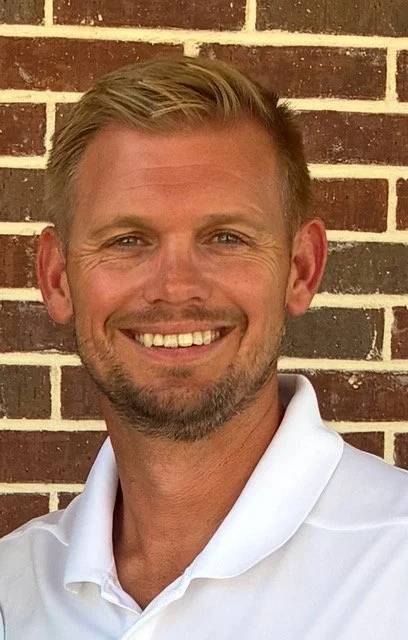
William Carroll
What inspired me to join the U.S. Navy was a combination of patriotism, the desire for a true challenge, and the influence of two brothers from my hometown, Jason and Matt Higgins, who had gone before me into the SEAL Teams. Seeing people from our small community accomplish something so demanding showed me what was possible. Their example motivated me to follow in their footsteps and pursue a path that required complete dedication, resilience, and commitment to something greater than myself.
I enlisted after graduating from college, during a time when I was searching for direction and looking for a purpose driven career. I wanted to test myself physically, mentally, and emotionally plus serve in a way that pushed me far beyond my comfort zone. The Navy, and specifically the SEAL community, offered exactly that. Becoming a SEAL is not simply a job; it is a calling that demands every part of who you are.
During my time in the Navy, I served as a Navy SEAL and also specialized as a Joint Terminal Attack Controller (JTAC). My service took me across the Middle East, the Pacific, and Europe, supporting missions alongside teammates who remain some of the finest individuals I’ve ever known. The training and deployments taught me more about discipline, leadership, and teamwork than any classroom ever could.
One experience that stands out in my memory is Hell Week, widely considered one of the most challenging evolutions in military training. It pushes candidates to their absolute limits. The physical exhaustion and mental strain are unlike anything else, but the purpose behind it is clear: real world operations can last for days with little or no rest, and the Teams must know you can endure hardship, stay focused, and support your teammates through anything. Hell Week is not about punishment, it’s about preparation.
My time in the SEAL Teams shaped who I am in every aspect of my life. The team first mindset I learned there guides the way I lead and work with others today. The discipline to keep moving forward, even through failure, is something I carry into my personal and professional life. Integrity and accountability remain core values, and I believe my reputation built through work ethic and character is my most valuable currency.
If I could share one message with young people considering a Navy career, it would be this: it’s about heart. Service teaches perspective, humility, and strength. If you are willing to give everything you have, the Navy can give you a purpose and a foundation that lasts a lifetime.
Above all, I want to honor those we lost, express gratitude for the support I’ve received, and recognize the pride I have in my Maine roots and the values this community gave me.
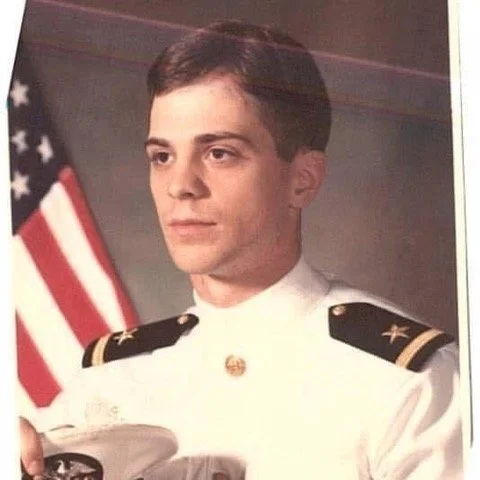
Steve Rosser
I joined the Navy right out of college. I graduated on December 19th 1981 and was in Officer Candidate School (OCS) on January 2nd 1982. Not really having a plan for what I wanted to do, I was enticed by the ads that I read seeking responsibility and a sense of adventure and travel. When I graduated from OCS, I became a Surface Warfare Officer (SWO) with my first job as a Missile Control Officer on a KIDD Class Destroyer USS CALLAGHAN (DDG 994), a ship that is still in active service in the Taiwanese Navy. On my first deployment, we accompanied the Battleship USS New Jersey (BB 62) with port stops all over Asia. I followed that with subsequent tours in Washington DC and onboard the USS CHANCELLORSVILLE (CG 62), an AEGIS Class Cruiser, as the Weapons Officer.
Following my Active Duty time (9 years), I remained in the Naval Reserve for another 15 years, retiring in 2005. I also worked as a contractor in the Defense Industry for another 32 years in a number of jobs supporting Navy and Missile Defense programs, winding up my career as President of a Naval Engineering company supporting critical National Security programs.
All told, I spent over 40 years working in and with the US Navy and Missile Defense Agency (MDA). Because of my association with the Defense Industry, I have travelled the world extensively, working with many Allied Navies including Japan, Spain, and Norway. I can’t imagine how different my life would have been without the Navy. Everything I’ve accomplished and most of my friends tie back to my time in the Navy.
For young people unsure of a job or future after school, serving the Navy or any other service is a great way to serve your country and help determine your future career.
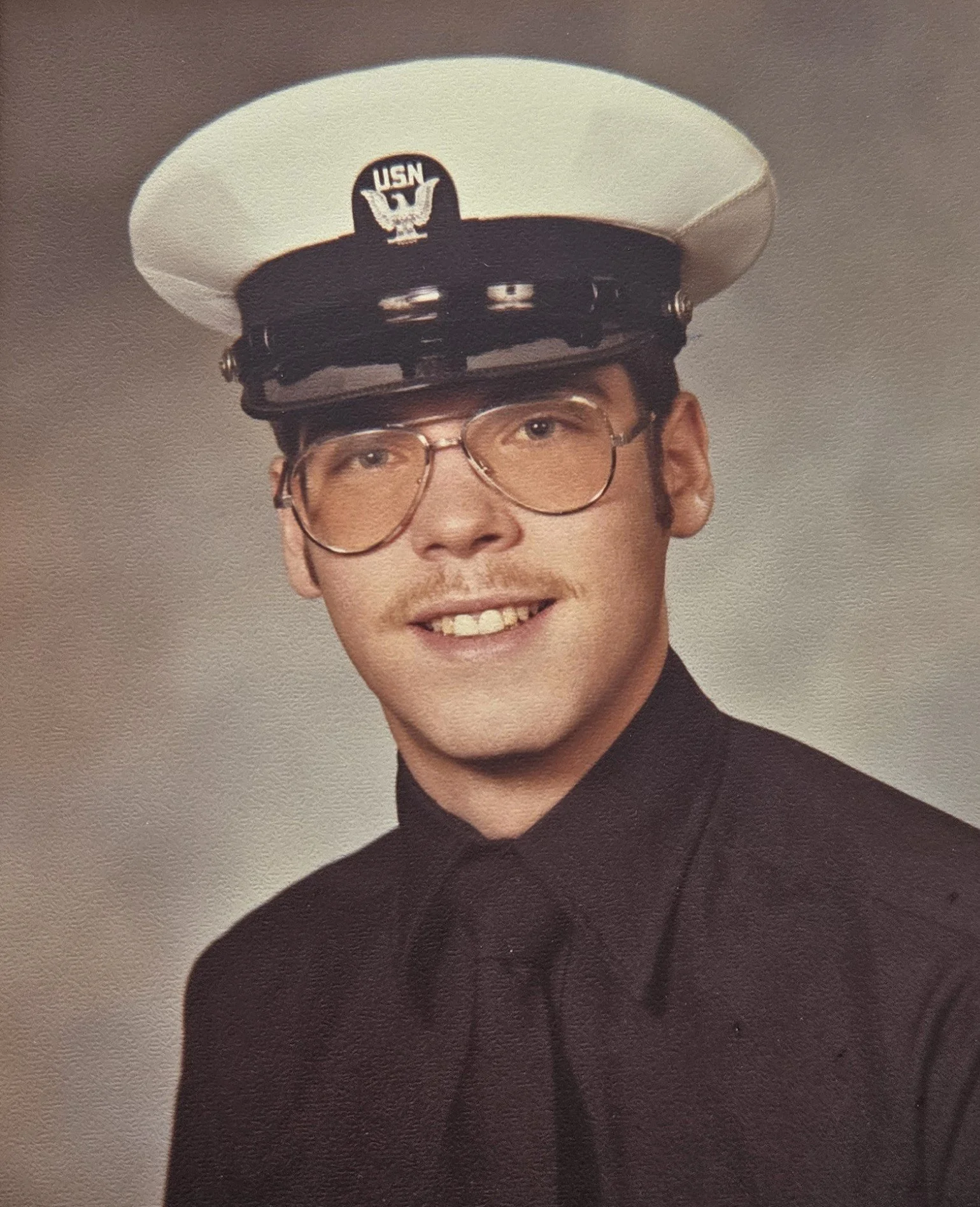
Jay Quinn
After graduating from high school in 1980 I decided if I didn't find a good job by the end of the summer I'd join the Military. I was 18 and working at Zayre’s in Waterville Maine. Like any 18 year old at that time, I partied regularly and had a girlfriend. The reality was that I wasn't going anywhere and it was time to man up and do something useful with my life so I joined the Navy and volunteered for submarines.
I became a Radioman onboard a Ballistic Missile Submarine. Our job was to hide in the North Atlantic waiting for orders to launch missiles. I served from 1980 to 1984 and did three patrols onboard SSBN659 (Will Rodgers) and 1 on SSBN626 (Daniel Webster). A patrol in the 80's typically consisted of a total of 30 days in Holy Loch, Scotland and 60 days out to sea underwater (the longest for me was 72 days underwater). I was honorably discharged as a frocked second class petty officer RM2SS (Submarine Service).
One comical memory is from boot camp. The Seals came in and were trying to get us to sign up. I volunteered figuring if it didn’t work out I'd go back to the Subs. They informed me Submariners are the only ones they couldn't poach, because very few sailors are crazy enough to sign up for Subs, so I was turned down. A more serious memory would be the time a screwup caused our sub to go into a crash dive. We took a down angle sharper than a sub is technically supposed to survive. The sub passed test depth on the way to the bottom which was well below crush depth. Quick thinking by the crew on watch allowed us to surface. The sub was extensively damaged but thankfully no one was injured.
The Navy shaped my character in that it forced me to grow up. Let's face it, when you’re sealed up underwater with 140 other sailors who are depending on you to ensure you'll see the light of day at the end of a patrol, you grow up quick. Don't get me wrong, we raised hell while on land, but got serious when the hatch closed and we dove underwater.
For those considering a career in the Navy, go in with the knowledge that you're giving your country a blank check which could include your life. Too many join thinking it's a game and then whine when it gets tough. It isn't all fun and games, but can be very rewarding.
Submariners are a different breed. We're a bit crazy. We purposely serve on a boat designed to sink. We spend 60+ days over 100 feet underwater and isolated from family and friends. I don't regret any of it. To all who served it doesn't matter if you served 2 or 20 years, only 1% of civilians put on the uniform and risk their lives and all those 1%ers are just as important as the other. Thanks to all of you who put on that uniform to protect us.
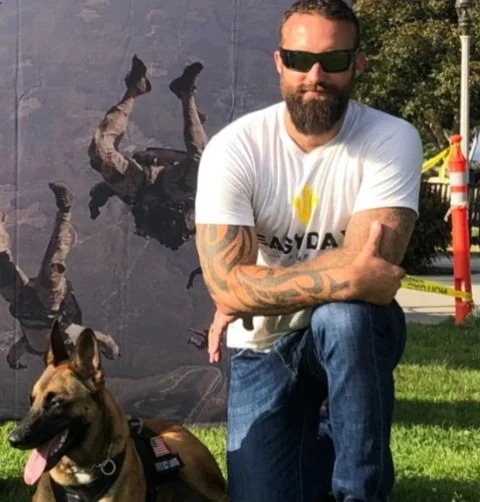
Jason Higgins
I joined the United States Navy at 17 years old because of a deep sense of patriotism and a belief that I had from a very
young age: some people are put here to protect others and eliminate bad people from the earth. I always knew I would fight. I always knew I would stand up for what I instinctively knew was right.
My parents played a huge role in that. I watched my father get up every morning at 4 a.m. and come home at 5 p.m., sometimes seven days a week for months at a time. I watched my mother work nonstop as a waitress, sometimes coming home crying after an out of state customer mistreated her. My parents worked tirelessly to raise me and my three siblings, and that work ethic is burned into me. They are my heroes.
I enlisted right after graduating high school. That summer I worked as a lifeguard, running every morning, swimming constantly, and preparing myself physically for what I knew was coming. I enjoyed it. I liked pushing myself.
I was trained in the Navy as an electrician, then went to BUD/S — Basic Underwater Demolition/SEAL training. After passing, I went through advanced training, static line jump school, freefall training, and was assigned to SEAL Team Four in Virginia Beach. My specialty was breaching — opening blocked doors and gates either manually or with explosives.
My service took me all over the world. I deployed multiple times to Panama and Colombia training indigenous forces, which gave me the opportunity to learn jungle warfare, riverine operations, and how to survive off the land. That included swimming in shark-infested waters and experiencing more than one near death situation. I later deployed to the Middle East three times, with stops in multiple other locations.
The day that stands out most was the day I was ambushed — a twelve-hour firefight. We were packing up to head back to Baghdad from another city when troops in the area came under contact. We were the closest unit, so we were called in. As soon as we arrived, we came under heavy automatic weapons fire, sniper fire, and mortar fire. The rounds were snapping by my head and the mortars kept landing closer and closer. We took our first injuries early on.
After six hours we pulled back to reload and were sent right back in. This time we were engaging the enemy as close as ten feet away. At one point I was certain I was going to die, but my only thought was to take as many with me as I could. Later, the fight opened up to distances of 100 to 200 meters and beyond. I spent most of the day on a vehicle-mounted .50 caliber machine gun. My vehicle took over 100 rounds, many of them coming very close to me. I have no idea how I survived other than by the hand of God. I felt it on me that day and many times since.
As the sun went down, five or six Apache helicopters flew overhead, firing missiles simultaneously and wiping out the entire line of enemy combatants. I remember thinking how unbelievable the day was, how alive I felt, and how grateful I was to still be breathing. That night I sat on the roof, smoked a cigarette, looked up at the sky, and felt completely at peace — a deep sense of accomplishment and appreciation for life I have carried with me since.
The Navy turned me from a motivated young man into a highly focused one capable of whatever I set before me. It took the work ethic my parents gave me and taught me how to harness it, rebuild myself, and endure anything. Even after my Navy service and later work supporting national security missions through 2015, that mindset never left me. No matter how hard life gets, no matter what breaks, I will stand tall until God decides my time is over.
When it comes to advice for young people, I tell them this: find something you are deeply passionate about and go all in. Don’t let your own mind talk you out of it. Most people will doubt you, the only opinion that actually matters is your own. Protect it at all costs. I don’t automatically recommend the military. I recommend a peaceful life, living consciously, building a family, and surrounding yourself with love. In the end that’s what life is all about. But if you feel the calling, who am I to dissuade you? I believe that a calling is God-given. Some people are put here for the sole purpose of protecting everyone else. To sacrifice themselves so other may have peace. I was honored to do it during my time.
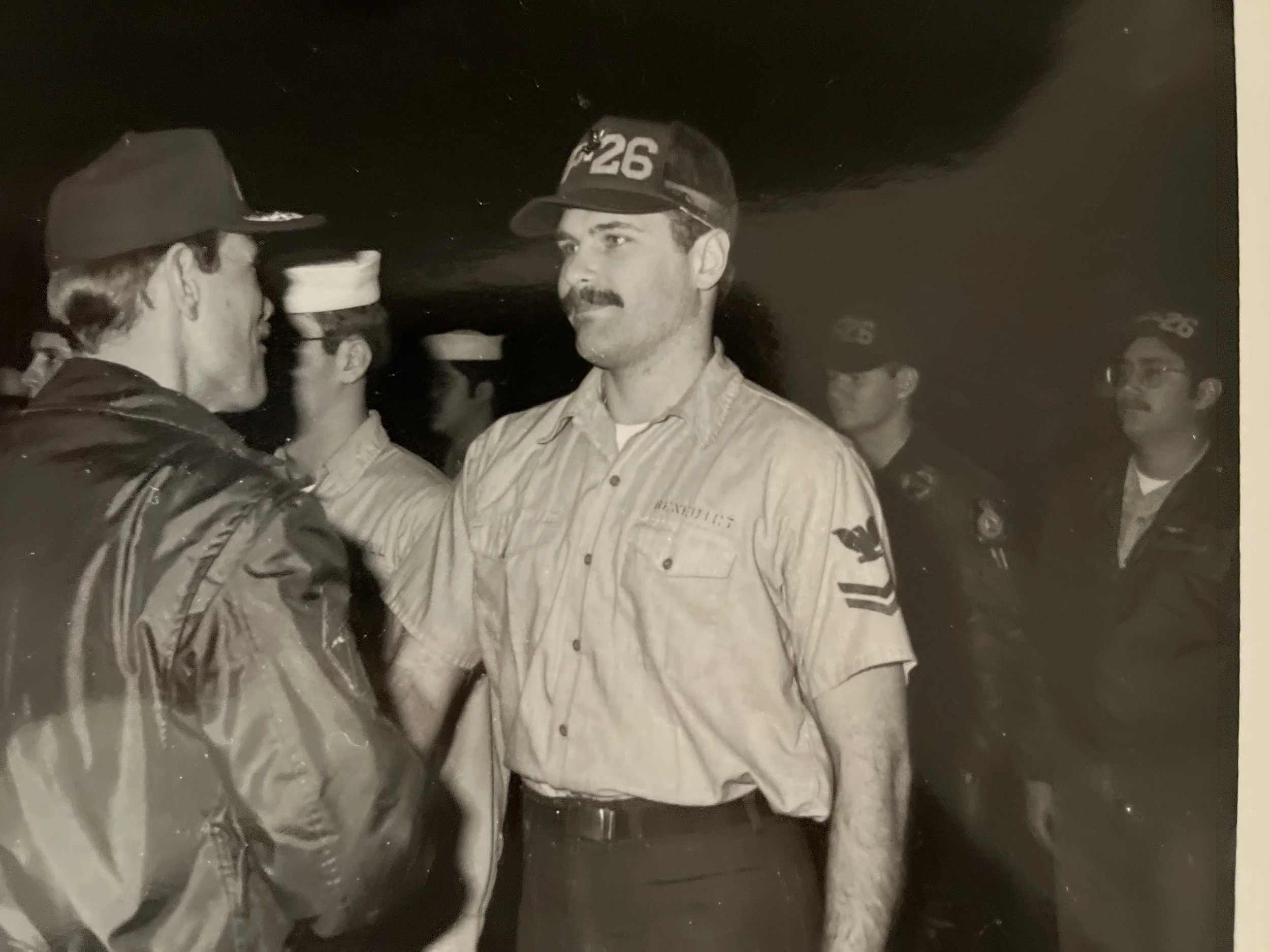
Andy Benedict
I wasn't exactly inspired to join the Navy. I had no idea what I wanted to do with my life and didn't want to spend a lot of money at college to find out.
I enlisted right after high school graduation in 1978 at 18 years old but didn't go to boot camp (in Orlando) until January 1st of 1979. Life was great back then. I actually enjoyed boot camp, for the most part. I was my first time in Florida, and it was nice and warm. It was a big culture shock, as I was coming from a very small town in Pennsylvania to all the diversity of the Navy. I really liked (and still do), the differences in the people from other areas of the country.
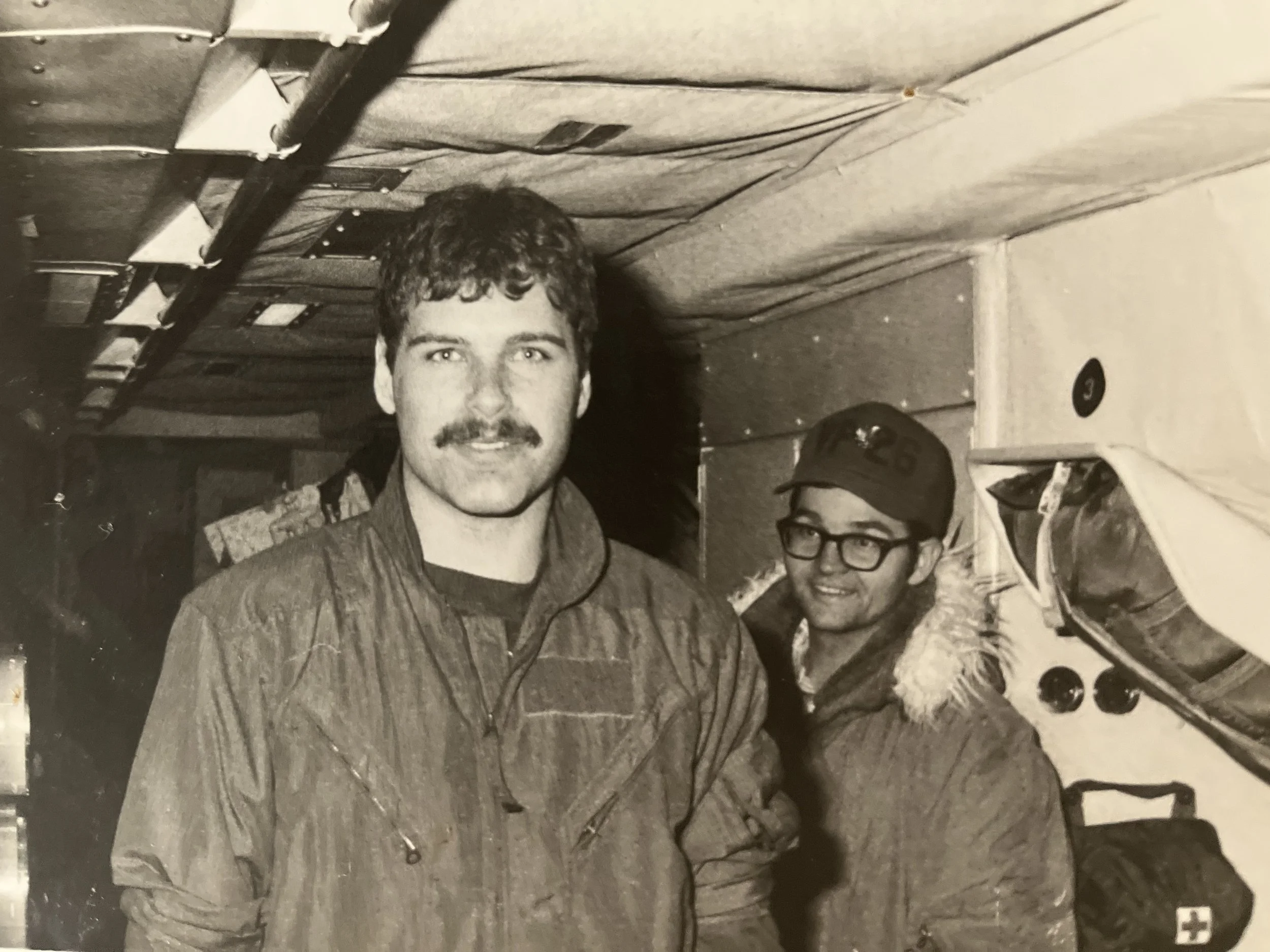
I had the best job in the Navy. I was a Photographers Mate and at the time I went to "A" school it was one of the best in the world. The school was in Pensacola, where the Blue Angels train, and we saw them every day. I went from school to Washington D.C., then transferred to NAS Brunswick, VP-26. We deployed to Rota Spain, Keflavik Iceland, and Bermuda. Each deployment was 5 months long. I got to see Scotland, Portugal, and Holland also. I then transferred back to D.C. I finished my Navy time there as an Admiral's photographer and separated in March of 1988 because I wanted to raise my family. My favorite time in the Navy was the 5 months in Spain. I got SCUBA qualified, spent a lot of time at the beach and really enjoyed the culture.
I learned so much from being in the Navy. I learned responsibility, and dependability (qualities that my parents taught me, but were reenforced in the Navy). I met so many interesting people, many of whom showed me a different perspective on the way they thought and acted. The Navy also brought me to Brunswick where I met my wife Lois and we had our two kids right here at St. Andrew’s Hospital.
My advice to anyone who is contemplating joining the armed forces would be: 1) If you want a trade, it is a great place to learn one. 2) If you want to further your education, they will pay a lot of it. 3) If you want to have a career, become an officer. The benefits between officer and enlisted are huge. 4) If you do join, enjoy it.
Donald Higgins
I joined the Navy because it was my destiny. I had a relative that served with George Washington and uncles that served in World War II and the Battle of the Bulge. My dad joined World War II at 17 as an enlisted man at 17 years old and retired after 33 years of service as LCDR Commander. He made it clear that his five boys would join the military. All five of us followed orders! My brother Richard joined the nuclear submarines and retired as a Lieutenant Commander just like our father. Michael joined the Army and went on to become a Catholic priest. Peter was a photographer as a Navy Airedale. Stephen was also a Navy Airedale and now he is a scientist.
I enlisted when I was 17 on the delayed entry program. The summer before entering the Navy (1974) I worked at Fisherman’s Wharf Inn parking cars. I also met the love of my life, Eileen Giles, while in high school and I married her in 1979. I went to boot camp and turned 18 there. After bootcamp, I was assigned to the USS Marvin Shields FF 1066, stationed at 32nd Street in San Diego, California.
I was a ship’s serviceman or SH, I worked in the laundry and ran the ship's store, to say the least it made me popular. My time in the fleet took on two West Pacs, San Diego, Hawaii, Samoa, Kwajalein, Guam, Subic Bay, Japan, Taiwan, Keelung Typhoon Evasion, back to Guam and ending with anti-submarine warfare exercises. During the West Pac, we crossed the Equator. According to Navy tradition, you are a “polywog” until you cross and then you become a shellback. During the West Pac, the ship was called upon to independently steam a total of 15,193 nautical miles.
The moment that stands out the most from my service is when we were hit by a typhoon in the Taiwan Straits. The ship was tossed and turned and it took the top of our mast off. We had to take the ship into Subic Bay, Philippines for repairs. The repairs took about a month and we were able to explore the area. We took a “Jeepney” driver to Manila. Another moment that stands out is refueling out to sea. We would have to shoot lines across to a refueling ship, while both ships are underway. This time the line snapped and it almost took our legs out!
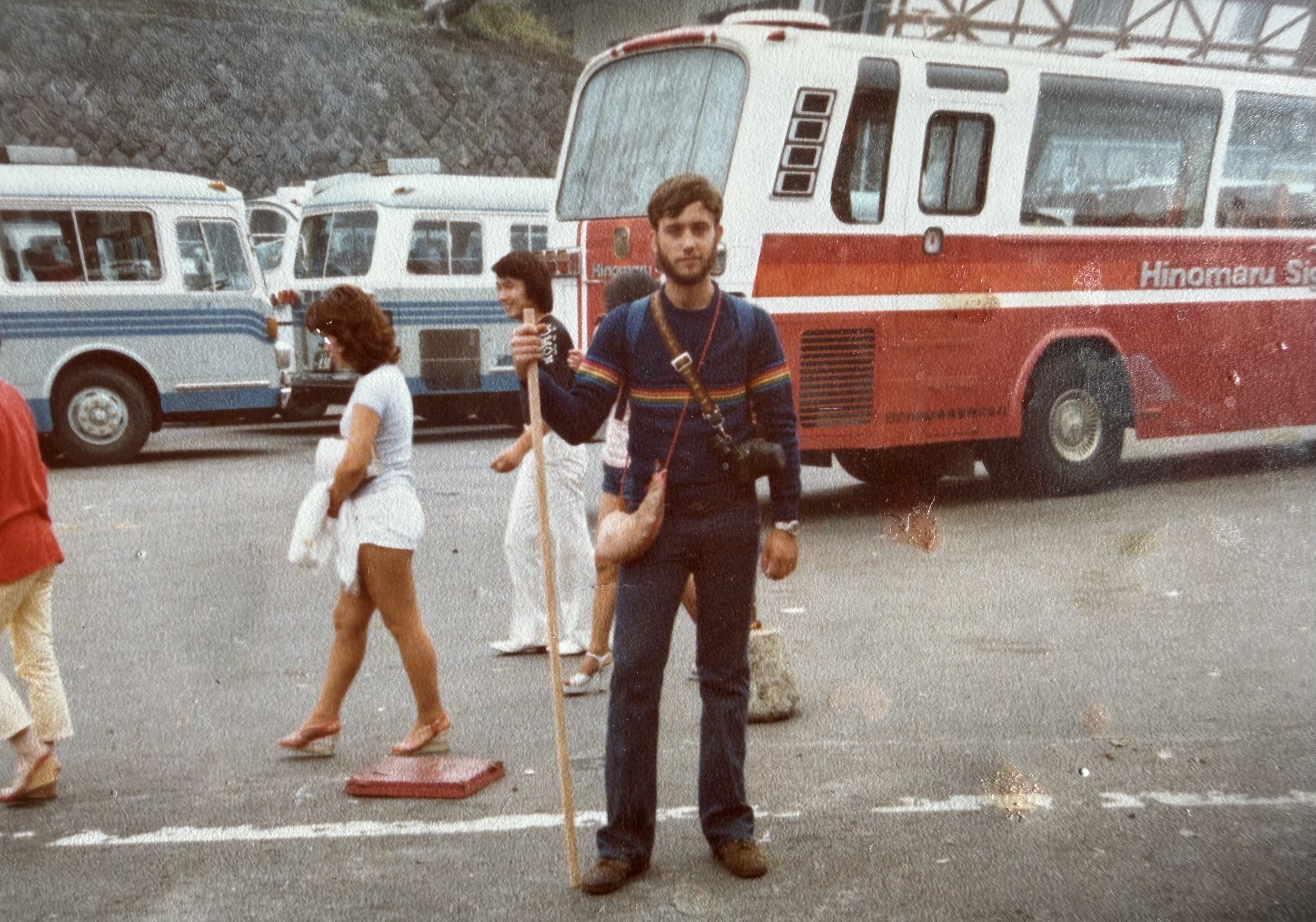
My time in the Navy shaped who I am today in many ways. It gave me the opportunity to see many places and experience cultures I never would have otherwise. My favorite among these was when I climbed Mt. Fuji. The Navy also prepared me for my career building ships at BIW for nearly 29 years.
I would tell young people considering the Navy that it is a great opportunity to see the world and experience other places. If it is your passion, you should go for it, but know it takes a lot of hard work and resilience. During my time in the Navy, I got to see the world and make a lot of friends that became like family. Even now, so many years later, I am still in contact with many of these people.
Mark Welsh
I grew up in New Mexico, specifically in Los Lunas . A small town in a rural area. After graduating from high school, I started college but soon realized I wanted to get away and see new things and experience the world. Deciding between a Navy and Air Force Career, I chose the Navy. Probably because of all the Navy war movies I watched as a kid.
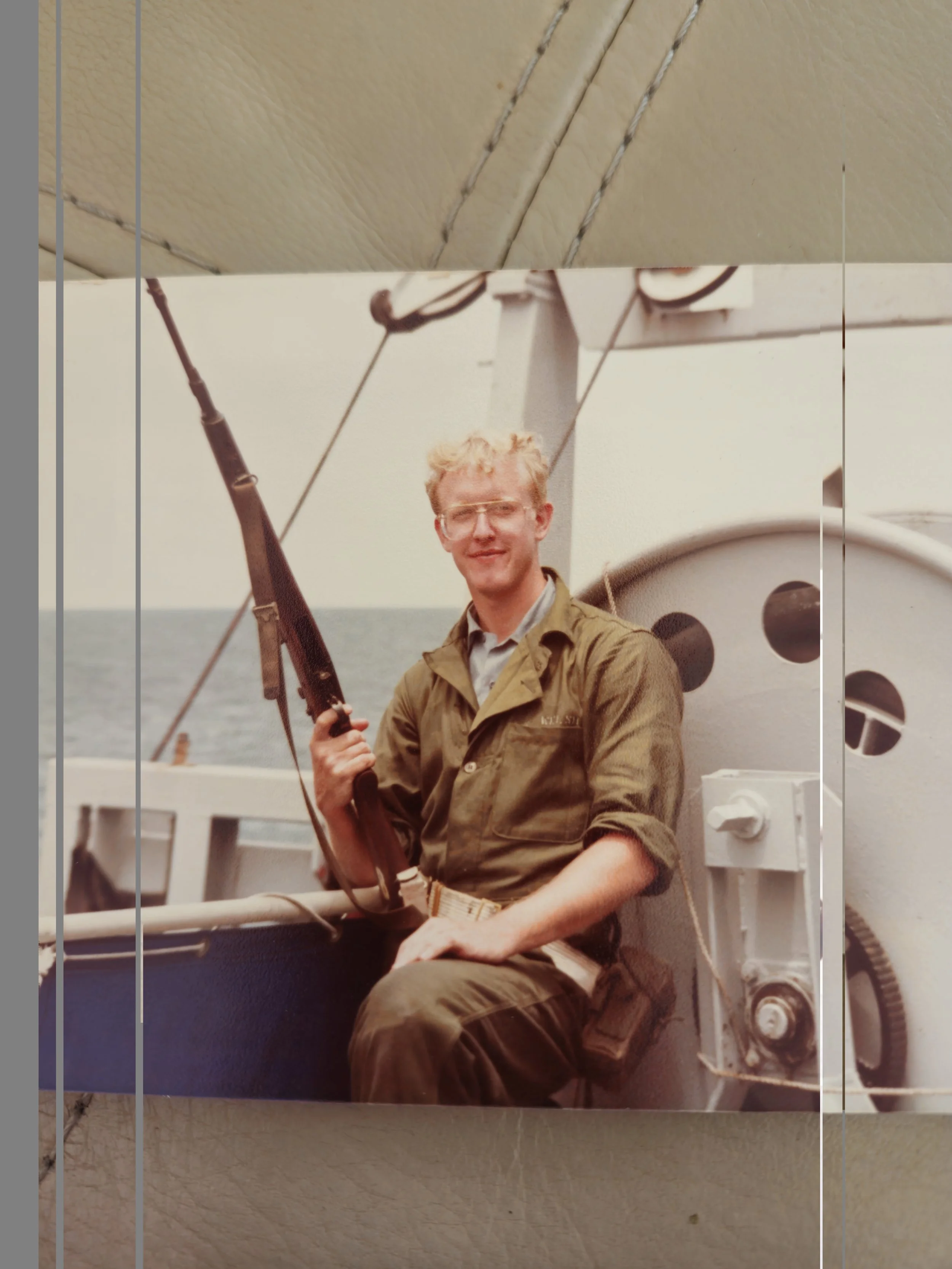
At 19 I enlisted and went to boot camp in Great Lakes, Illinois. I graduated from "A" school as a Gunners Mate. I traveled from San Francisco to Japan and stopped in the Philippines to meet the ship. Being a young Gunner’s Mate on the USS Tuscaloosa LST 1187, I quickly became acclimated to life on board a military ship.
During my service, I traveled to approximately nine countries. Life in the armed forces teaches you to take on responsibilities at a young age. Depending on your fellow sailors and them depending on you can be the difference in life and death in many situations. The ship’s motto was "do it right the first time every time". A good philosophy in life.
To anyone considering life in the military, my advice is to complete your entrance exams to the best of your abilities to broaden your opportunities and options. Your experiences will help you for the rest of your life.
Jerry Farnham
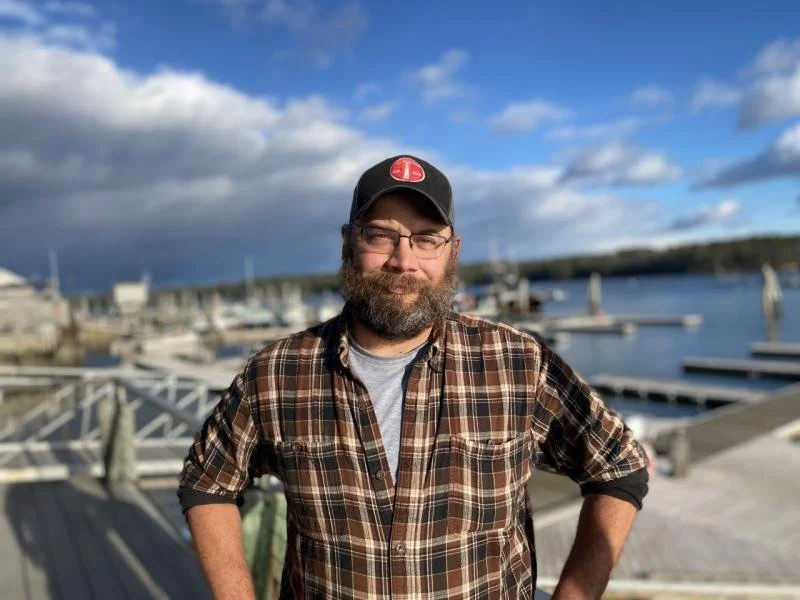
I remember deciding to join the Navy vividly, driving with my parents going across the old Bath bridge seeing the ships at Bath Iron Works. Not that there's anything wrong with Boothbay Harbor, but I saw those ships as a way to get out of Boothbay Harbor and see the world. My original plan was to do 4 years and come back to lobstering, but 9/11 happened and there was no way I was going to get out when my country needed me the most.
I was 18, in my junior year in High School when I joined the early entry program. I left for bootcamp June 17th 1998 just 12 days after graduating High School. It was such a huge change for me, bootcamp, "A" school and going to my first ship was such a culture shock. Then traveling to different countries, it was a great time. I learned a lot about life, and myself. I had originally joined to be an Engineman, a mechanic, but my career shifted and ended up doing base police and security.
A memory that stands out was when we were stuck on base in Bahrain, not allowed to leave. The base had a cool outdoor bar. A bunch of us went, all my friends, a diverse group of different races, religions and beliefs, but we were all friends, shipmates. We all sang "Proud to be an American Together" . The world would be a better place if we could all do that. The Navy made me more open minded and I value family more. The Navy just compounded the work ethic my parents had already built.
I’d advise that young people considering a Navy to do it, but go all in. Make Boothbay Harbor proud. As I always say when someone thanks me for my service, it was a privilege and I mean that with all my heart and sincerity.
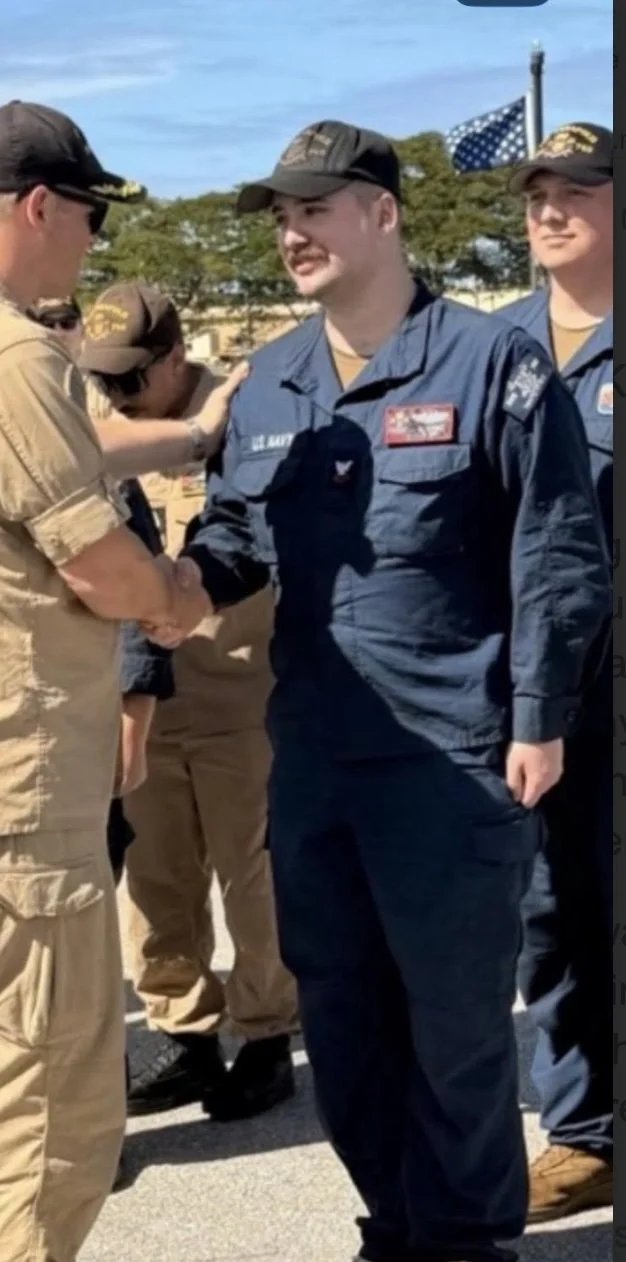
Griffin Kane
Growing up in Boothbay in a family that loved and spent every summer day on the water helped shape my path toward a career in the Navy. I grew up hearing stories about my great-grandfather, Clyde Jones, an officer in the Navy, and my grandfather, Robert Holbrook, a Navy deep-sea diver. Those stories planted a seed early on.
Still, it was always assumed I would attend college after graduating high school. I enrolled at Bentley University in Massachusetts and majored in finance, but it didn’t take long to realize that a future spent in a high-rise office, pushing papers day after day, wasn’t for me. I wanted something more—I wanted to see the world.
That realization led me to sign on the dotted line as a NUKE school candidate in the United States Navy. After Boot Camp, I reported to the Naval Nuclear Power Training Command in Goose Creek, South Carolina to begin training as a Navy Nuke aboard a fast attack sub fully aware that volunteering for the submarine fleet required a special kind of crazy.
Following two intense years of A School, Power School, and Prototype, I qualified as an EMN (Electronics Mate Nuclear) and was stationed in Guam aboard the USS Annapolis, a fast-attack submarine. An EMNs job is to operate and maintain the electrical systems that control the nuclear reactor.
During my first deployment, I reenlisted for another six years. I was granted the opportunity to attend Advanced Firefighting School in Pearl Harbor. Since then, I have been promoted to Petty Officer First Class. Although I have loved my time on Guam, I am looking forward to being stationed stateside this year so I can be closer to my family. I’ve also missed the changing of the seasons. Guam is hot year-round!
If I could go back and do it all over again, I wouldn’t change a thing. The Navy has taught me invaluable lessons in teamwork, perseverance, leadership, determination, and dedication: all skills that will stay with me for life and guide me through any career path I pursue after my time in the Navy.
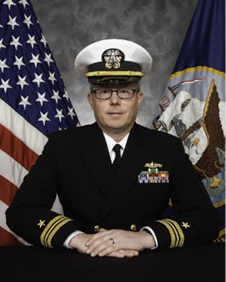
Patrick Lakeman
The views expressed are my own and do not constitute endorsement by the Department of War, Department of the Navy, or the U.S. Government.
I enlisted in the United States Navy at the end of May, 2000 at the age of 21. I am still on active duty today in the Navy nearly 26 years later and am currently serving as the Task Force Command Center (TFCC) Officer to Task Force 70 permanently embarked on the NIMITZ Class Aircraft Carrier USS GEORGE WASHINGTON (CVN-73) forward deployed in Yokosuka, Japan.
My reasons and inspirations for joining the Navy could be categorized as seeking adventure on a different path - not to mention that I was sick of going to school at that point. I grew up on Southport Island and was always around the water. My father, Marty Lakeman, worked at BIW building multiple classes of ships plus we always had the drone of the P-3 ORION Maritime Patrol aircraft overhead from Brunswick Naval Air Station. As I met many P-3 aircrew later in my career, they always told me that the droning noise was known as the ‘four fans of freedom’. The more I weighed the pros and cons of joining the Navy, the more it seemed to be clearer that I should take a chance and go for it.
When I left for Great Lakes Recruit Training Command in May of 2000, it was a bit of a transition period for the Navy and also the country as a whole. The US Navy was starting to chart a new course into the 21st century while the old Soviet Navy was largely rusting at the pier and the People’s Republic of China blue water Navy had yet to be built. September 11th the following year would change that trajectory in many ways.
I left boot camp in August of 2000 and headed to Dam Neck, Virginia to attend Operations Specialist (OS) Class ‘A’ School. An Operations Specialist works in the Combat Information Center, the tactical nerve center of the ship - often portrayed in movies as the darkened rooms with the glow of radar sets and the crackling of radios in the overhead. Tasks for an OS included tracking of ships and aircraft on radar, plotting on charts, log keeping and drafting operational messages, radio communications, and with advanced training, an OS learned the coordination of tactical data links and tactical controlling of aircraft. While at school, I selected orders to my first ship, the USS COWPENS (CG-63) which was forward deployed to Yokosuka, Japan. The COWPENS was a TICONDEROGA-Class Guided Missile Cruiser which was built at BIW – I remember going to the launching with my brother Ted back in 1991. The COWPENS seemed like a natural fit.
The mission for a Guided Missile Cruiser was the be the Air Defense commander for an Aircraft Carrier Battle Group employing the extremely potent AEGIS Weapons System. AEGIS was, and is to this day, the best Surface to Air Missile Battery system in the world. COWPENS seemed to always sail with the USS KITTY HAWK (CV-63) which was the Forward Deployed carrier in Yokosuka for the 7th Fleet. We patrolled the Western Pacific and deployed to the Arabian Gulf in 2003 for the invasion of Iraq. The COWPENS was the first ship to fire Tomahawk cruise missiles in that war as part of the first few weeks of strike missions and the embarked Carrier Air Wing (CVW 5) on KITTY HAWK destroyed hundreds of targets while supporting the US Army and Marine Corps ground forces. We steamed back to Japan not long after the Saddam Hussein government collapsed. Later that year I attended Air Intercept Controller school in San Diego and learned how to tactically control fighters for Fleet Air Defense. This was one of the most enjoyable jobs I had during my Naval career.
My time in the Navy after the first couple of years on the COWPENS was also great – I met my wife Nely in Bali, Indonesia and we built our family while stationed in Japan. She and our son James are and have been my rock and with their support, I was able to get through multiple patrols and deployments over the years. The military family is an amazing tribe of support as life for those who journey to deploy to sea (or ‘downrange’ in the Army and USAF lingo) can have some significant challenges.
We ended up staying in Yokosuka, Japan through another sea duty tour (this time on the ARLEIGH BURKE Class Guided Missile Destroyer the USS CURTIS WILBUR, another BIW built ship, and a follow-on shore tour at a waterfront training command. Japan is an amazing place and for the tens of thousands of Sailors and their families, it is a privilege to be the guests of the Japanese people. Yokosuka is a Navy and shipbuilding town and as such, I would often run into a few BIW people and I always seemed to see Boothbay native Al Barter at least once a year. I know that he really enjoyed travelling and working in Japan and one time I was back in Maine for leave, I ran into him at the Irving station on Route 27 of all places. We had a good laugh about that turn of events. I would also always meet a lot of Sailors who had spent time in Bath on newly-built ships and they always seem to complain about the cold winters but also remembered the warm and friendly people there in Maine.
I was commissioned as a Surface Operations Limited Duty Officer (LDO) in 2012 and spent the next 10 years on a couple of ships stationed up in Washington State and a shore tour in Hawaii. In 2021, I came back to Japan on another BIW-built cruiser, the USS SHILOH (CG-67) as the Air Defense Officer. My wife and I had promised our son James that he could go back to Japan for his last three years of high school and he had a blast being a ‘Red Devil’ at Nile C Kinnick High School on the base. That is another great benefit of being stationed overseas as your children will get to attend the Department of Defense Education Activity Schools or even in some instances get to attend international schools with the other expat children and that is a great and unique opportunity for a kid to learn about the world. The SHILOH was a great tour and served the Fleet proudly but like the COWPENS, she will decommission later this year after over 35 years of service. The Guided Missile Cruiser’s role is being absorbed by some of the Destroyers but I will miss them.
I didn’t see myself making this a career initially but as every Sailor knows that if you have a great first Division/Command, then it becomes a lot harder to leave. Your shipmates enter a strange place between friends and family and no matter how long the period of separation is, we always pick right back up where we were. There is a bond with those that you deploy and go to sea with. I have been able to serve with people from all 50 states and over 30+ different countries as our crews come from all over the place. I have been to ports all over Asia, Oceania and Australia. I have gotten to stuff like sandstorms at sea, a lunar rainbow, the Northern Lights, countless sea spouts and flying fish. I have not yet seen the ‘Green Flash’, but I can tell you that a sunrise trumps a sunset any day of the week. We even got the chance to do a swim call over the Mariana’s Trench, which at over 35,000 feet, is the deepest part of the Pacific Ocean. That swim call was fun but also terrifying.
If you (or someone you know) is thinking of joining the Navy, I can only offer my own opinion and experiences but as I believe that a huge piece of maintaining the all-volunteer Military is by candidly ‘recruiting your relief’, I will share two important things (for me) for consideration for joining the Navy and other branches as well as thank the American People for their support.
The first thing is learning to succeed as part of a team in an organization. I don’t think there is another organization on the planet that will entrust an 18-year-old with the operations of the running a nuclear reactor hundreds of feet under the surface of the ocean nor letting a 23-year-old recent college graduate have the awesome responsibility for maintaining safety of navigation of a billion-dollar destroyer with hundreds of Americans Sailors sleeping soundly below decks. These responsibilities are not given in a vacuum but are rather the result of rigorous training and qualifications which often can only be found inside the United States Military. I used to get frustrated by some elements of this but as I got a bit wiser, I saw that an effective team could adapt and flex to a wide variety of challenges while single individuals (while capable) would eventually flame out and fail.
The second thing is the wide variety of jobs and career fields available. The Navy (and military in general) have very detailed websites and apps that outline all of the different paths and benefits of service such as the Post 9/11 GI Bill and TRICARE. These fields extend far beyond ships, aircraft and submarines as there are plenty of room for professionals in medicine, law, industrial hygiene and safety, communications and cyber as well as construction and Special Operations. A potential servicemember can arm themselves with a large amount of information long before they darken the door of a recruiting station.
Overall, I wouldn’t change a thing and still would join the Navy again tomorrow.
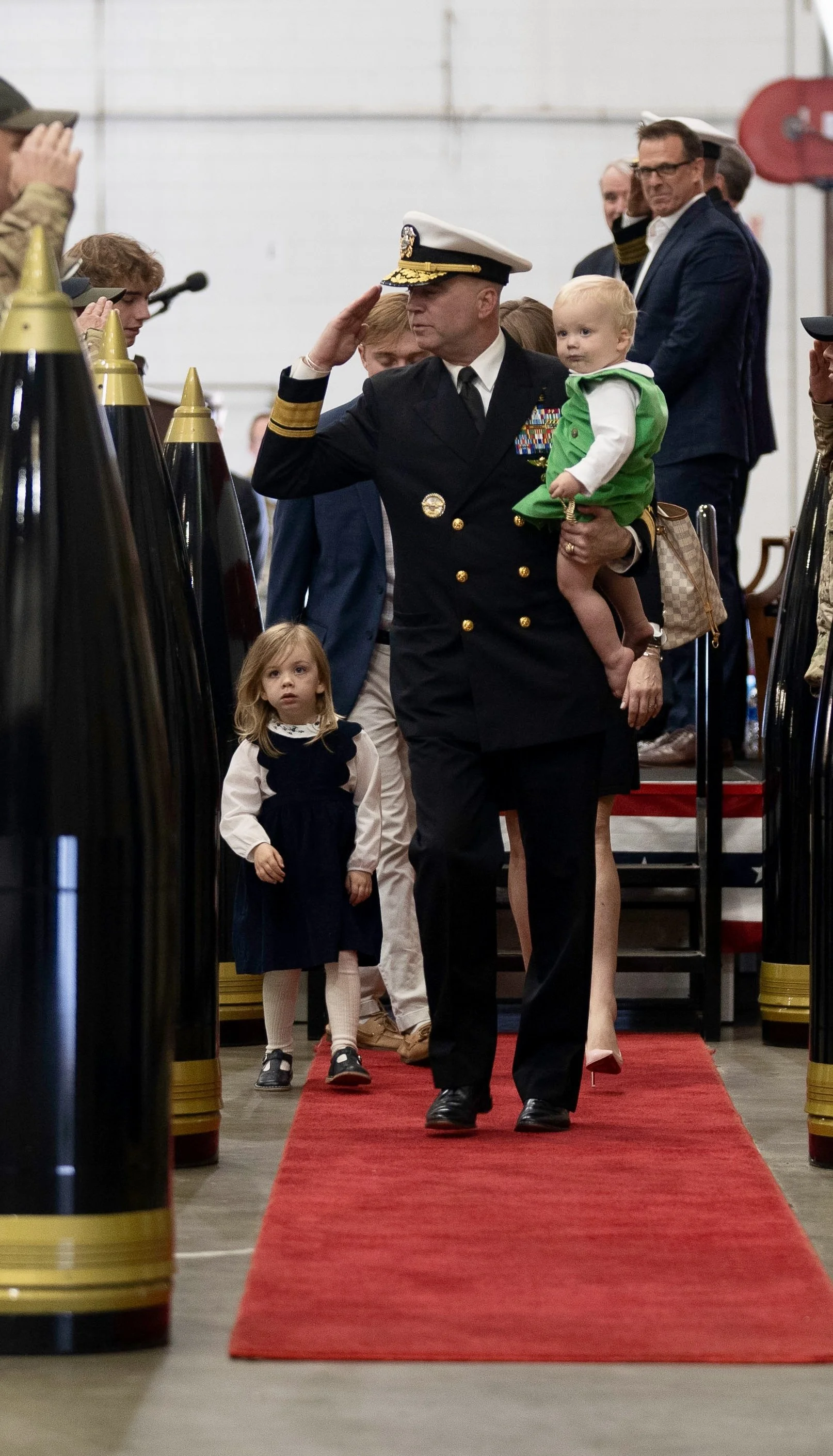
Hugh Wyman Howard III
My father and family’s service in the United States Navy inspired me to serve. I locked on this path when I was five years old. In high school, I applied to one undergraduate program - the United States Naval Academy - with no plan B. Everything I did growing up was to prepare me - e.g., rowing at T.C. Williams High School (of Remember the Titans fame) in Alexandria, VA and achieving the rank of Eagle Scout.
I was 17 years old on Induction Day - July 7th 1986 - day 1 at Annapolis, the commencement of Plebe Summer. Simpler time - few distractions. Top Gun movie elevated the naval service within the broader culture during the time.
Navy SEAL - for only 32 years. I served as the Commander of Naval Special Warfare Development Group during the period we led through the largest single combat loss in U.S. Special Operations history. How our team and families faithfully served our standard in this tragedy - honored our fallen - and stayed on mission stands out as my proudest moment of service.
The Navy shaped the ways I creatively solve hard problems and solve for complexity and risk to deliver non-linear outcomes. The Navy is a wonderful place to develop as a human being in defense of our great Nation. Humility and stewardship anchor our culture - humble in the face of complexity - stewardship in the sense of ‘leave the boat faster because you were in it.” A apolitical / nonpartisan force, servants of all Americans. Motto = The Deed is All - Not the Glory.
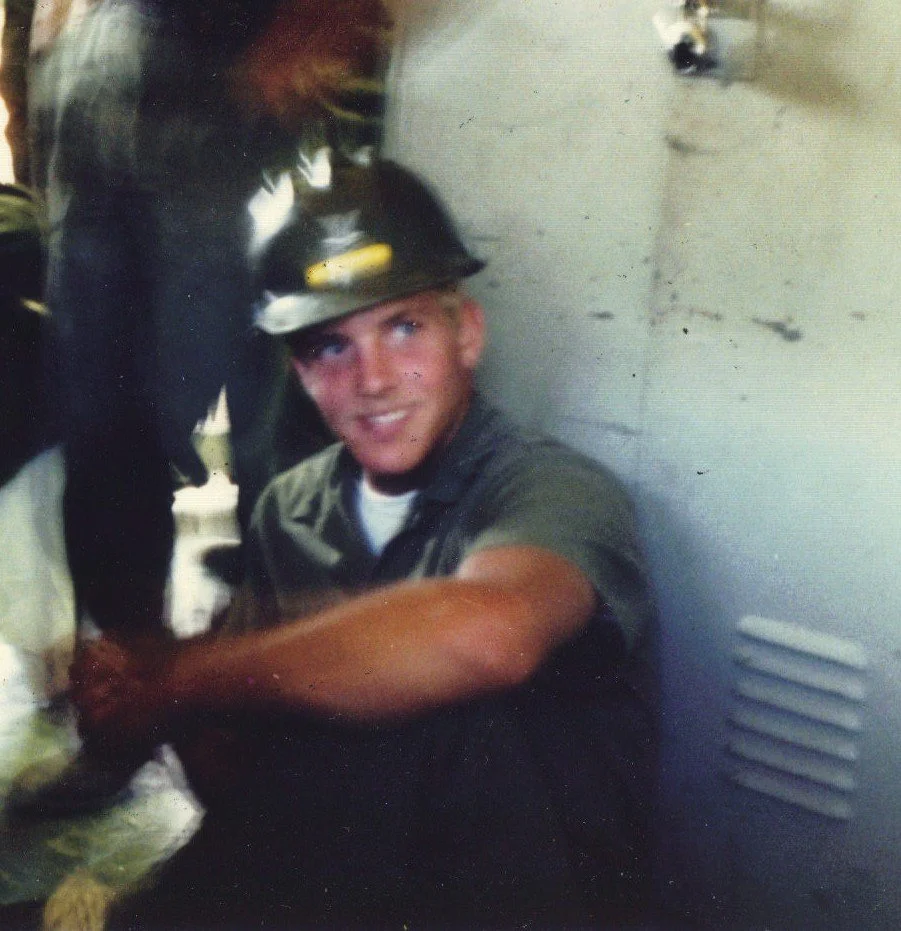
Linc Sample
I guess you could say that I was destined to join the Navy at an early age. According to my mother, when I was four she left me outside the old post office on McKown Street, you could do that back then. When she came out, I was standing next to a metal recruitment sign, the one with the sailor in a peacoat in front of an aircraft carrier. I pointed to the picture and announced that that I was going to be a sailor when I grew up. Later, when I was eight, my brother-in-law came home from his first tour in Vietnam as a Seabee. It was then that I learned that I could be in the Navy and build things. The die as they say, was cast. Anyone who grew up with me knew I was bound for the military, my fascination with militaria made that clear.
My father had an idea of me going to one of the service academies, but I certainly lacked the academic discipline for that. When he passed away shortly after my 18th birthday, knowing that college would be a waste of my mom’s resources I contacted the recruiter in Brunswick, took the ASVAB and on May 6th I signed up on the early enlistment program. It was 1978, Carter was President, there were gas shortages and the economy was failing. I left Maine on Nov 27th bound for boot camp in Orlando with two classmates, Andy Poore and Steve Gray. We graduated on January 20th, exactly one year after my dad passed.
I attended Steelworker “A” school to learn welding, cutting, concrete reinforcement, drafting, sheet metal work and steel erection. I was meritoriously advanced to E3 and given my choice of orders. I chose Adak AK which is the middle knuckle of the Aleutian finger. I landed there in May of 1979. On Adak I worked in the Public Works Department repairing and fabricating for base maintenance, mostly overhead and hanger doors. The experience of getting caught in an Aleutian whiteout or “williwaw” is certainly something I’ll never forget. In November of that year Iranian students took the embassy personnel hostage and suddenly, we were on alert.
I left Adak the next May with orders to Naval Mobile Construction Battalion 74 deployed to Rota Spain. I was assigned to a crew building a 40 x 140-foot mechanics shop for the Construction Mechanics maintaining the battalion’s equipment and moved to become assistant crew leader on a 40 x 60-foot building in the material liaison yard. In October we returned to the states.
The battalion’s homeport was in Gulfport MS and there we immediately started planning for our next deployment, continued training and conducted field exercises. The battalion was to deploy to Roosevelt Roads Puerto Rico, but I was assigned a detachment to Argentia Newfoundland where we were to complete a 60 x 720-foot pier. The original had been built by the Seabees during World War 2. Completing that project ahead of schedule we were sent to Puerto Rico to finish out the deployment. There I was assigned to Charlie Company staff as Education Petty Officer until the battalion returned to the states.
Once again “74” was back in Gulfport readying for its next deployment to Guam but I wouldn’t be going with them. Instead, I was assigned to Det. Iwakuni on the mainland of Japan at a Marine Corps Air Station there. My first project was as crew leader for a 4-inch elevated steam line into the base hospital. Upon completion we moved on to the steel crew for a 160 x 140 – foot warehouse for the Navy Exchange. Then it was back stateside once again.
The next deployment for NMCB 74 was to be Puerto Rico once again for some reason but my enlistment was coming to an end. I had extended it for a year in Japan as per the conditions of my original enlistment. I spoke to the Navy detailers several times attempting to get an assignment on the upper East coast but to no avail and on October 14th, 1983, I separated from active service.
I’m not sure if there was any one experience that stands out as my service was full of memorable times and comrades. I was assigned to the armory as a range instructor during every homeport and that was terrific garrison duty. I forged a number of friendships with exceptional men working on challenging projects and gaining and honing skills that would last a lifetime. Where else could a kid between 19 and 23 have a chance to be crew leader on projects that in today’s dollars would be worth a hundreds of thousands of dollars. Planning and estimating, manpower management as well as the military leadership challenges were priceless in my endeavors in civilian life. I can honestly say that a day has not gone by that I have not used some skill from my service whether it be professionally or in my personal life.
I have always encouraged young men and women to join the service, whatever the branch. My advice is to go into it with their eyes open and make sure what they want is clearly written in their enlistment papers. The chance to learn a great trade, gain leadership experience and meet people from all over the nation and from so many walks of life are to be had in very few other places.
The fact that I was able to serve in a unit as storied as the Seabees and followed in the footsteps of the men who built the roads to victory in the Second World War and those who that continued their tradition of excellence was a great privilege and honor. To have been part of the group that exemplified the “Can Do” spirit is what I am proudest of. The fact that the Navy still relies on this little known group is a testimony to their outsized impact. That’s why when asked if I served in the Navy I always reply “No, I was a Seabee”.
Zakia Thiesen
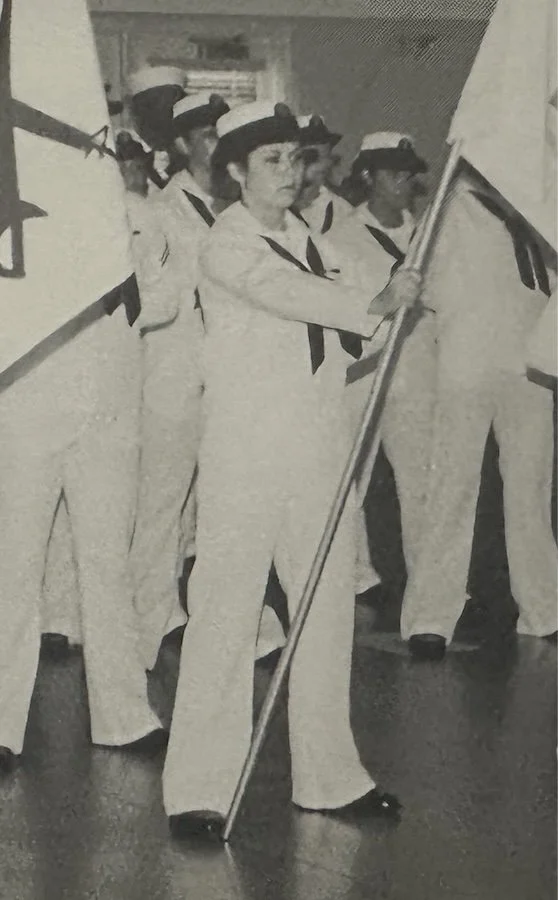
I was inspired to join the Navy when I was a kid, but I joined at 17 to prevent homelessness at 18. It was fall 1999 and I would watch the weekly episode of the TV show JAG with my mom. There were scenes that depicted life on an aircraft carrier in a couple episodes and 10 year old me thought that was the coolest thing ever. I knew then I wanted to live on one and I was willing to do just about anything to get to do just that. Watching JAG, and later NCIS with my mom solidified the plan. It wasn’t until fall 2006 and the start of my senior year of high school when I was told I was going to be kicked out at 17 when I graduated high school that I made the decision.
I originally joined the Navy through the Delayed Entry Program as a Store Keeper. And since I was 17, I had to have both my parents sign consent for me to join and that in and of itself was a battle. My mom signed off right off the bat. My dad however wasn’t having it. My recruiter spent 8 hours on the phone with my dad to convince him, which eventually he did agree. I enlisted in the DEP in January. I found out my dad said yes at the end of Cheer Practice. It was on my 18th birthday that I called my recruiter up and said I need to go early due to personal reasons of wanting to leave Maine. I had a new contract in two days and 10 days later I shipped out to Great Lakes Naval Training Station as a Culinary Specialist.
With my rate (job/MOS) as a Culinary Specialist I was I assigned to Ships Company with the USS George Washington, CVN 73. I reported to the ship, the day after Thanksgiving 2007. While attached to the ship we performed a home port shift from Norfolk, VA to Yokosuka, Japan. Seven of my “A” school class mates and I all were assigned to the ship, so it wasn’t as scary as it could have been having a few familiar faces around. Believe me when I say this, the ship when fully staffed with the Air Wing, Admiral and staff, housed 6012 people though we were never fully “racked out.” It’s a scary thing for a 18 year old to go alone into. In comparison, the population of Boothbay, Boothbay Harbor and Southport would not fill each bunk that’s available. Now imagine feeding that many people, because that was my job. I worked with a team of roughly 60-90 other sailors, including the Airwing cooks spread over 7 galleys (kitchens), a bake shop and a dedicated cargo/food stores team, in charge of feeding all of those sailors three full meals a day. Plus a midnight rations for those lucky few that worked nights. We had two shifts working days or nights and always overlapped at shift changes. A “normal” work day was 14-16 hours depending on what was needed of each watch crew at sea. In port it was also 14-16 hours but we would only work 5 days one week and 2 days the next. Split into a port and starboard watch sections. Every other weekend we had off.
Picking one experience or a moment from my time in service is hard. The one memory that stands out the most happened on May 22nd, 2008 when the ship had a massive fire. It started in an auxiliary boiler exhaust and supply uptake space on the sixth deck and quickly spread from there up to the flight deck and beyond, traveling through cable spaces. Overall the ship’s company crew spent about 12 hours looking for and fighting the fire and rescuing four of our shipmates trapped in a space adjacent to the space that the fire started. It took three days of overhaul work at sea as we limped to port after losing 1/3 of the ships habitual spaces due to smoke, fire and water damages. As well as millions lost in food stores due to the loss of power to those spaces. All the food was thrown overboard.
My time in the Navy shaped me in ways I never expected. It allowed me to find my own voice. It taught me how to work with people who may or may not be people I would have ever worked with or even met and make friends with people I never would have expected to make friends with. People from different parts of the country and even some from other nations. It’s given me an ability to understand our international workforce and know the struggles they have, because I have also experienced being on the other side of the world, away from everything I had known.
The biggest piece of advice I can ever give someone about serving in the Navy would be to enjoy the experience as much as you can. You are the only one who can make or break your experience with your attitude about how you handle things on a daily basis, in port or at sea.
Being a sailor is an honor and a privilege. Never let someone tell you otherwise. Living on a ship is living in a literal industrial work space. It’s just one that just takes you to places you never thought of going and experiencing things with people you never thought you’d ever experience it with.
Joe Blake
I graduated from NMVTI (Northern Maine Vocational Technical Institute) in Presque Isle, Maine in 1966 with a degree in Building Construction. Jake Stevens, Carl "Skip" Williams, Jr, and I enlisted in the United States Navy Seabees.
After boot camp, the three of us went in different directions. My orders were to report to Coronado, California where I went through SERE (survival, evasion, resistance, and escape) training. After more indoctrination in Coronado, my orders were to report to camp Pendleton, California for small arms training with the Marines. Upon completing the courses in Coronado I received orders to Adak, Alaska where I met Bruce Lindhorst. Bruce was also a Navy Seabee UT( plumber).
Bruce and I became close friends. After a year in Alaska. We both got orders to report to Vietnam. Bruce got severely injured in a mine explosion. The two men with him didn't survive their injuries. Bruce and I have remained friends. My orders were to report to Battalion 302 stationed in Cam Ranh Bay, Vietnam. After a few days I was sent with a small detachment from 302 to help build a naval air facility north of Cam Ranh Bay . There were Seabees of each trade. Builders, electricians, equipment operators and plumbers. Nights often came under mortar attacks. A helicopter gunship was armed with a 134 machine gun which could fire up to 6,000 rounds per minute. It was assigned to the Naval Air Facility. During a mortar attack, the helicopter would hover over our location and then fire their high velocity machine gun at the incoming mortar launching positions. We also set up two 50 caliber machine guns to fire randomly at the hill where the Vietcong would launch their attacks.
We worked up to 12 hours a day to get the base finished so the Navy could move the P3 squadron up North to our position from Saigon. Every fourth night I would rotate into rifleman team or damage control team. Some days we would pour up to 300 yards of concrete. We built barracks, a motor with lifts for vehicles, a carpenter shop, and a machine gun in placements. I worked the Naval Air Facility for 12 months from January, 1968 to January, 1969. After my tour of duty was finished in Vietnam, my enlistment was up and I was sent to Seattle, Washington for separation.
I would recommend the Navy Seabees to anyone who likes working in the building trades. While in the Navy, I was able to travel to many places such as Japan, Philippines, Taiwan and many places in the USA. I still stay in touch with a lot of the Seabees I served with.
Mark Carter
I joined the Navy because I liked the idea of serving my country. It’s also a tradition in our family. My uncle fought in World War II as a tail gunner on a bomber and was shot down over Burma, when he was just 22. My dad was in the Navy, as was my brother and my nephew is still serving. We also have a family story about an ancestor that died defending Boothbay against the British in the War of 1812. So, we have long tradition of service to our country. It was a bit of an adventure too. I knew I didn’t want a Navy career, but I wanted to see a bit of the world before coming home to Boothbay.
I enlisted at 18 before I graduated from high school under a delayed entry program. I had the summer off after graduation and then left on September 4, 1985. Communication was so different then. I wrote letters home to my parents every two weeks, and my mom saved them all. She had given me a nice Pentax camera to take with me, which was great because I was able to take a lot of photos of my time away.
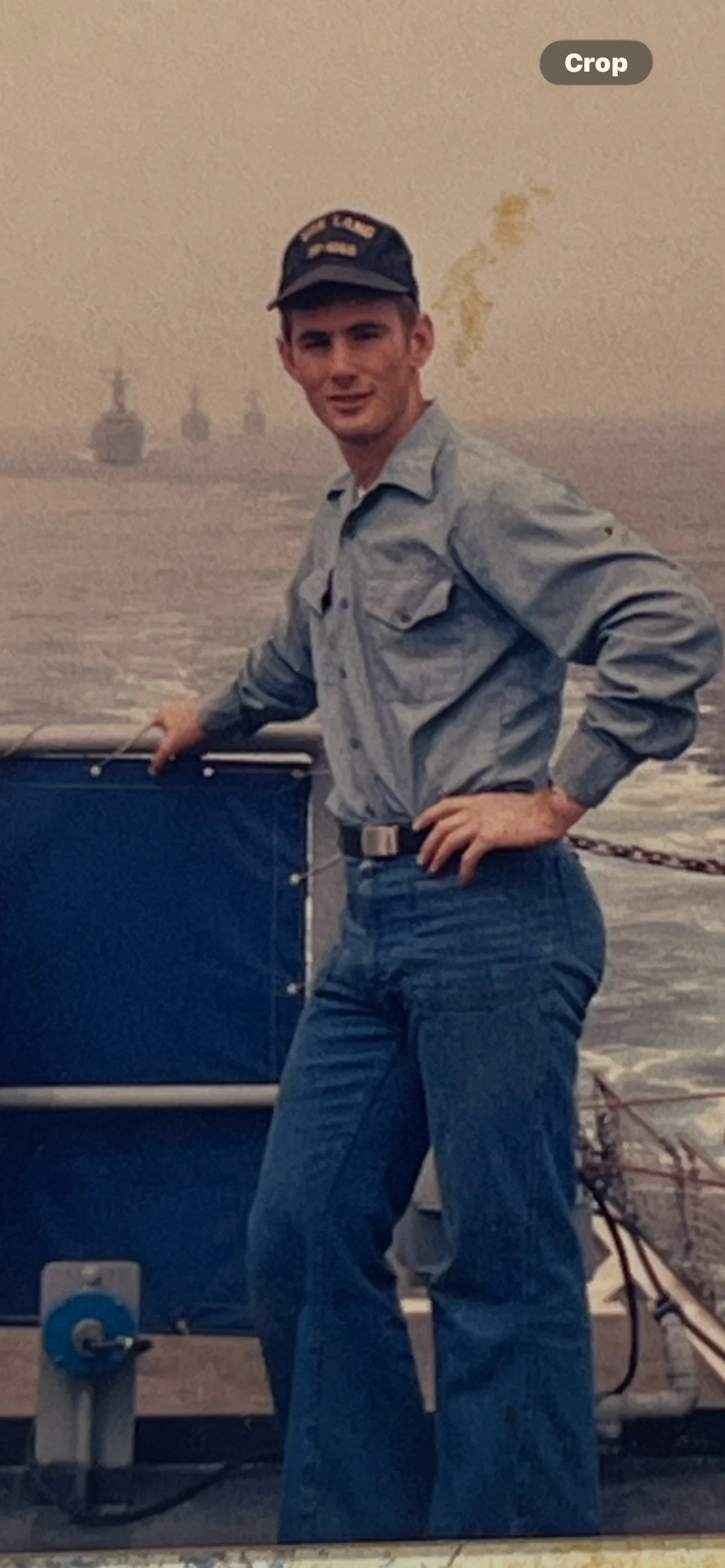
I went to boot camp and the follow up school, A School in San Diego. In A School I trained as a machinist and did well, 2nd in my class, so after I graduated, I had a choice, I could either stay in San Diego or get stationed in Norfolk, Virginia. I decided to stay in San Diego and was assigned to the USS Lang. I felt it was kind of like fate that I was assigned to the Lang as the keel of the ship was laid on the day I was born.
The USS Lang was a Fast Frigate – not a large ship, so I got to know everyone on the ship. Our role was to hunt and neutralize enemy submarines. Helicopters would take off and locate the submarines using special sonar, giving us the coordinates for our ASROC system. On the ship I was part of the Flight Ops group, part of the firefighting team. Another responsibility of the Lang’s was drug interdiction, looking for boats smuggling drugs into the US, stopping them, arresting the crew and then calling the appropriate government agency to bring them in. We also assisted with burials at sea.
I had some great experiences in the Navy. We cruised up and down the west coast, generally going out for two weeks at a time, going to the Panama Canal, Hawaii, Vancouver, and places in between. During my four years, I was stationed in San Diego for two years and then in San Francisco for two years. Some of the fun things I did were:
- Getting to go to the World Expo in Vancouver in 1986. The Lang was the flagship for the US and we got to see all the sights.
- When I was in San Francisco, I did a lot of hiking and want to a lot of sporting events. The Navy encouraged us to go out and do things like that.
- I got to see Hawaii and Australia. When the ship was doing offshore training in Hawaii, I had some leave accumulated so I was able to go on shore and see the sights. Before I was discharged, I again had some leave built up so I flew to Australia on a cargo plane and spent a few weeks there.
- I was able to experience the offensive firepower of the 5 inch/54 caliber gun and the ASROC missile launches, along with the phalanx CIWS 20-millimeter gatling gun.
The travel I got to do was a great experience and being in San Diego and San Francisco, I was also able to understand what it was like to live in an urban area. It was fun, but it made me appreciate the Boothbay area much more – more relaxed, less crime and danger. I also enjoyed the camaraderie in the military which I think is true in every branch of the service.
If I were giving advice to a young person, I would recommend the military, and for them to go into it with the intention of learning a trade or skill that you can translate to civilian life. The military is a great place to learn a science or engineering trade. The military teaches you how to learn and how to be successful in life. Overall, I think it makes you a better person.
I had a busy four years in the Navy and would definitely do it again, if I was 18.
Tom Blake
I was inspired to join the Navy from an early age because my Uncle was a career Navy man for over 30 years, serving as Master Chief Ship's Serviceman. Throughout my childhood and early adult years I had the privilege of hearing how honored he was to go to work each day, often starting in one place at sea or port and finishing in another area or country, doing a job he loved and working with people from all over the world. Although I was fortunate to hear his stories, receive his letters, and feel the excitement of his Navy years and the rewards they brought him, I didn't consider joining the Navy myself until I was older. I graduated from high school (Class of 1967) and went on to attend Husson College in Bangor with my buddy, Gary Blake. We had a great time, but I don't think I took my studies as seriously as I should have. I attended college for about a year and a half before deciding it might not be for me at that time. I returned home to Southport and worked with my father for a while in the building business. The draft was beginning, and I needed to start thinking seriously about my future. We come from a small but close family. I am the only sibling and was fortunate to have parents, grandparents, uncles and aunts who cared about me.
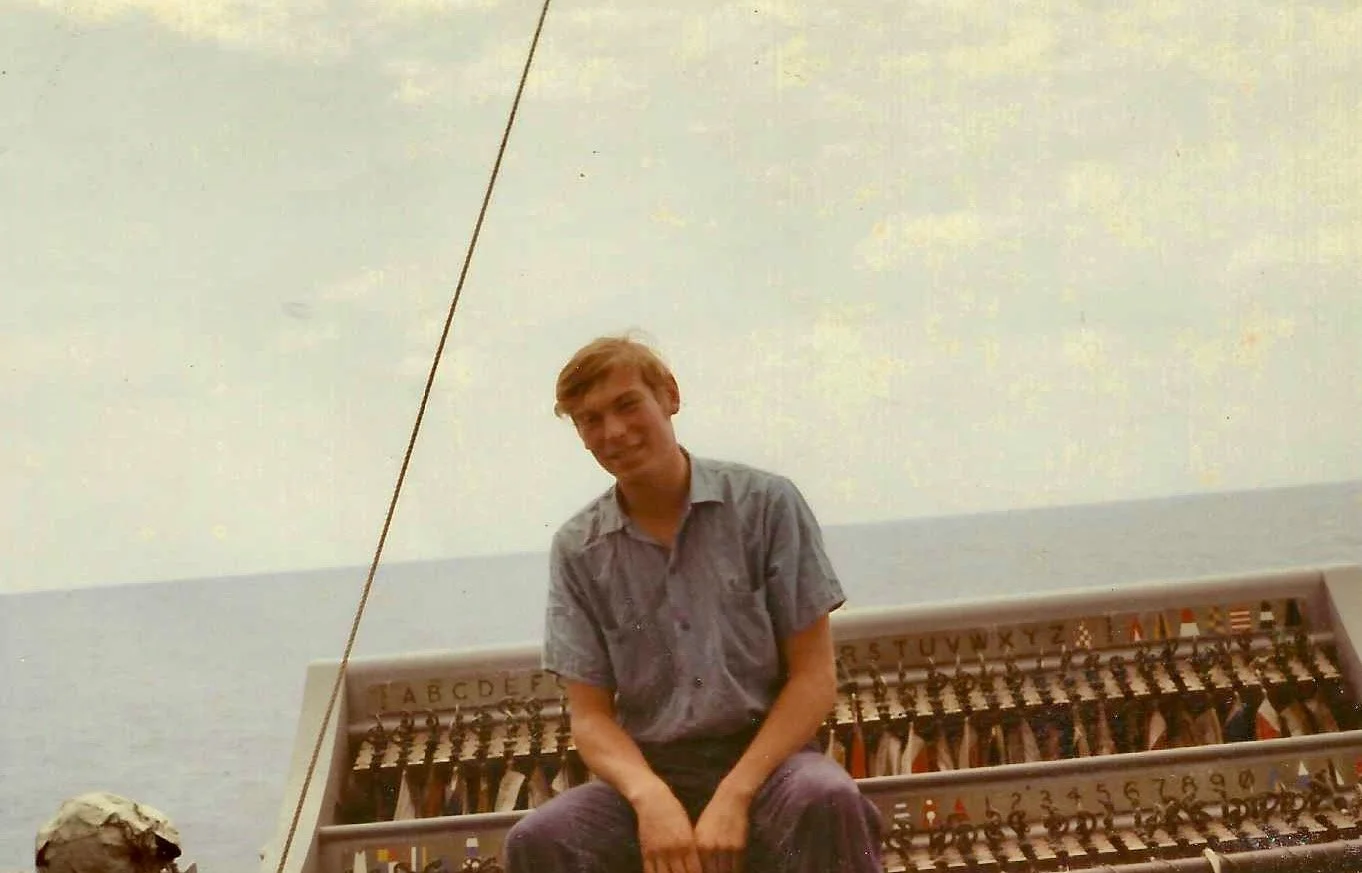
My Uncle Carl, who had inspired me in the beginning, thought the Navy would be good for me. Having grown up on the coast, learning to lobster with my Grandfather and later owning my own boat, I learned charts and the surrounding sea. He believed this experience would teach me discipline, training and camaraderie, as well as a darn good way to earn a living. So on August 12, 1969, I drove to the Navy Recruiting Station in Augusta and with my recruiter's assistance, enlisted in the United States Navy. It was one of the roughest and scariest days of my life but it felt good and I felt ready for what I had signed up for when enlisting in the Navy. The waiting period from enlisting to receiving my orders to report was almost the most anxious and nervous time I experienced in the Navy. During that waiting time, I received deployment requests from other military branches; however, the Navy assured me that since I enlisted with them first, my deployment would be with the Navy. I received my orders in September to report on October 25 to board the bus in Portland, Maine, and embark on my pursuit for Naval Training at the Naval Training Center in Great Lakes, Illinois. During training I spent my time in active ground training in the Great Lakes and then active training on the USS H.R. Dickerson (00708) out of Boston, MA, for 14 days. Being at the Great Lakes and the Naval Training Center was a wonderful experience right from the start. After completing my training, we received our assignments. I was assigned to report to Naval Station Newport, RI. Newport is a major training and education center, known as a “center of learning experience” and the birthplace of the Navy. 690 Peary Street, Newport, RI, would be my address and home port. Arriving in Newport I was assigned to the USS Glover. This Garcia-class -destroyer, fitted out with advanced sonar and antisubmarine weapons, was designed to serve as an experimental research escort for developing and testing antisubmarine weapons systems. I was surprised and thrilled that she would be my home, not only for the opportunity to conduct research trials and training with my other crew members, but because the USS Glover was built and launched at Bath Iron Works. I was at the launch on that day, April 17th, 1965, watching her splash down into the Kennebec River - never imagining I would be a crew mate one day. She was 414 feet long, held a crew of 239 men, and was capable of over 30 knots.
When I first started I was on deck and in charge of ensuring she was cleaned, spitshined, and ready for inspection every day. Later in my first 6 months I took the Quartermaster training specializing in navigation, ensuring the ship's safe operation and assisting in various navigational tasks. After finishing my Quartermaster training, it was very rewarding. As one of the quartermasters, I was responsible for navigating the ship. We used maps, charts and electronic navigation systems to plot the ship's course and ensure it stayed on track. We worked closely with the officers on deck and the ship's navigator. The biggest honor came in 1970, when I was on her second Atlantic Crossing and Mediterranean cruise visiting ports in Spain, France, Italy and Greece. It was an experience I will never forget; however, while there, I was fearful as well, while we were conducting tests and practicing following our own submarines in the Mediterranean we were being watched closely by Soviet Navy vessels - we had to be careful and watch our every move. Among many memorable experiences, one of the most memorable occurred while we were underway on a particular day. As Quartermaster, you are in charge of the ship's navigation while underway, ensuring we travel in the intended direction. In this position, you work with the officers, the ship's navigator, and the helmsman. Although others help support you, you are mostly in charge of your own direction. While underway on this trip the weather conditions were not always in our favor but it always worked out. I remember it was a horrid night; the wind and sea were swaying side to side. We were headed into the Mediterranean; it was pitch black and we couldn't see anything from above. I was probably relatively young, just out of my Quartermaster training so I think my crew mates that evening were questioning our whereabouts and coordinates. One of our highest-ranking officers was called in to verify our position. He walked in (not looking happy to be awoken in the middle of the night, I'm sure), didn't say a word, walked to the navigation system and pointed to the exact coordinates on the chart—the exact spot I had us. He never said a word to the other men, but he looked at them and at me, gave a wink and said, "Don't let them make you doubt yourself, you know what you're doing”, nodded his head and left the room. I gained more confidence in that moment than is possible in a lifetime. While aboard the USS Glover, I charted many courses, worked with great crew mates and officers, and made many friendships. When at sea we plotted courses, and while on land we were responsible for maintaining the charts and navigation. While onboard, even when the ship was in port we all still lived and stayed aboard. Because it was smaller than some of the other Navy ships, we became a close crew. We would eat together, attend church service on Sundays (which I hadn't done since I was a young boy), play cards, and go out on the town during our leave. However, you had better be back on board when you were supposed to, or you weren't going out anytime soon. Working with the officers, I was invited to play golf. Since I had pretty much grown up on a golf course I had a pretty good handicap. Rewarding experiences in the Navy included places we visited, such as meeting friends from home in Rome, traveling to Switzerland, and visiting Spain and Portugal again.
Around 1972, we were positioned in Boston at the Charlestown Navy Shipyard. The USS Glover was undergoing work, and we remained on watch aboard the ship. We still maintained and kept a watchful eye over her, but we had to leave more often and report back to Newport for assignments. As my term in Boston neared its end, I began thinking more about my future and what I might like to do going forward. I concluded that I might like to return home and join my father in the building business. I met with my officers, and they agreed to my early release a few months before my enlistment term ended. I received my discharge in July 1972, leaving the USS Glover and my crew mates at 0800 and arriving in Newport, RI, at 11:45. I received my discharge from active duty and a thank you for my 3 years of service; it was a great honor to be awarded the National Defense Service Medal.
As I began my journey back to Maine, I carried the honor of knowing I would still serve my country on reserve duty. As a Quartermaster I still had assignments on ships up and down the East Coast and worked with a fine group of men with whom I still share friendships today. I was honorably discharged July 28, 1975. I greatly enjoyed my time in the Navy. I learned a lot. I got to know a great group of people, traveled to places I never would have and helped serve my country and emerged a better person than when I went in.
If I could offer any advice to anyone wanting to join the Navy, do your research, talk to the recruiters. It is a commitment, but you will gain more than you ever thought. If I could do it all over again I would have stayed in the Navy longer, but I have no regrets; otherwise, I would not possibly have had the life/family I made coming back home. As I finish this story, one last memory has always stuck with me. While finishing out my final days one of the Captains came down to say farewell. He put his hand on my shoulder and said, "Just remember, Blake, a man as a civilian can get lazy if not careful. You've done a great job here and treated us all with respect and we are sad to see you go please always remember you are a Navy man". Go Navy!
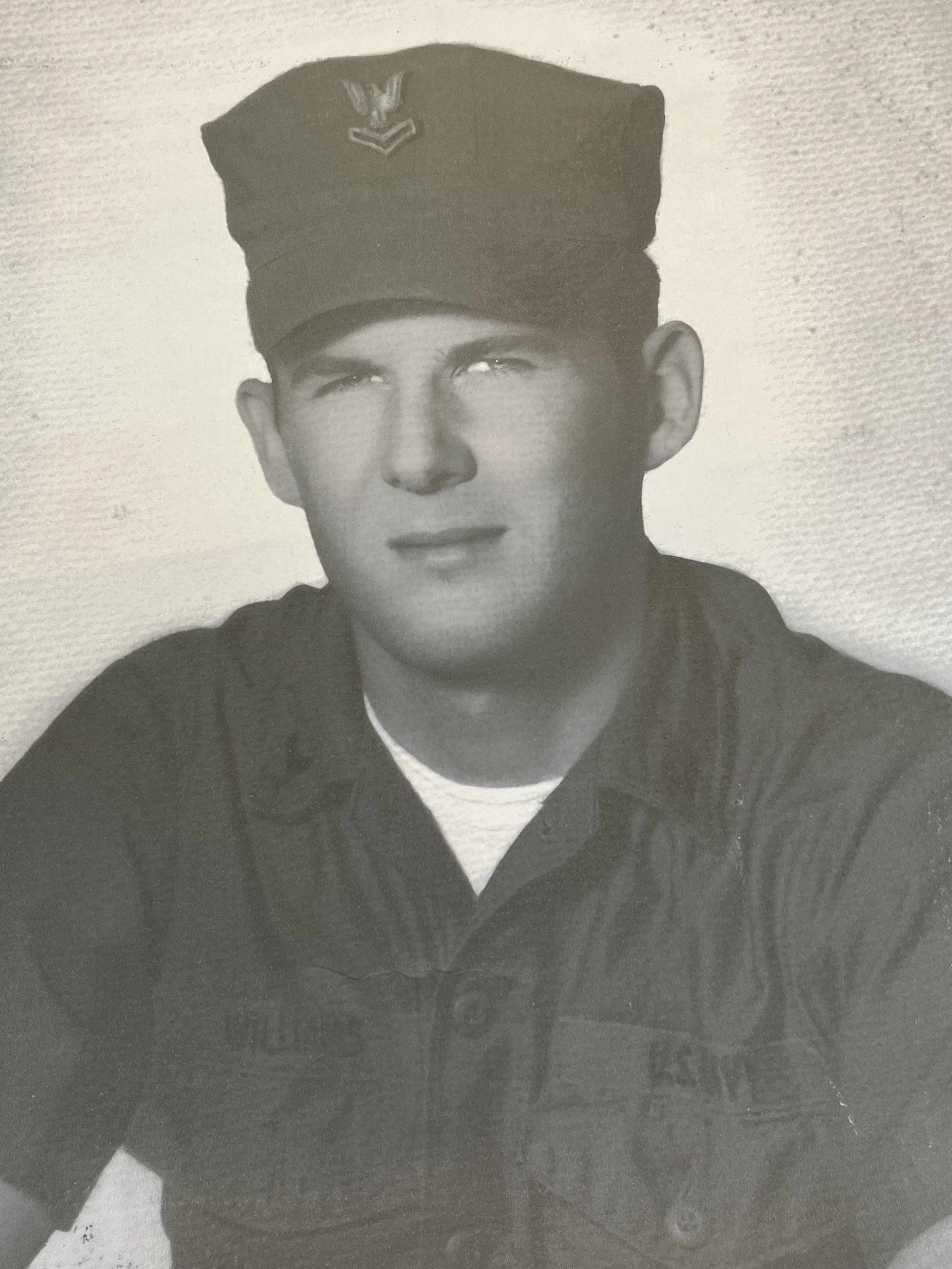
Skip Williams
My name is Carl (Skip) B. Williams Jr., and I served in the United States Navy in the Seabees from 1966 to 1969. The Seabees are specialized sailors within the Naval Construction Force (NCF) with the motto, “We build, we fight.” After graduating from Boothbay Region High School, I attended Northern Maine Vocational Institute in Presque Isle, ME. While there, Jake Stevens, Joe Blake, and I enlisted in the Navy Seabees in the delayed entry program.
After graduating in June 1966, I reported to the Naval Construction Regiment in Davisville, Rhode Island for boot camp. Upon completing boot camp, I was assigned to the Mobile Construction Battalion 1 (MCB1) for further training. Before being sent to Vietnam, I was sent to Guantanamo Bay, Cuba to repair damage to Officer Quarters caused by a hurricane. We were then sent back to Davisville, where I was reassigned to MCB40 and sent to Builders “A” School for 16 weeks followed by three weeks of intensive military training by Marine Combat Veterans at Camp Lejeune, North Carolina. I was assigned Fire Team Leader of 81mm mortar. Other training included weapons qualification and combat guerrilla warfare.
Having completed our training, we were sent to Chu Lai, South Vietnam for an eight-month deployment. While there, I repaired the Mess Hall, hospitals, EM Club, and rebuilt the staging area of a cargo handling facility that had been damaged by a typhoon. Being close to the South China Sea, this facility was crucial for transporting soldiers and material up and down the coast of Vietnam. During this deployment, I was assigned to be the Delta Company Training Petty Officer. After eight months of deployment, the Battalion was sent back to Davisville for six months to train for the next deployment in Vietnam. The purpose was to train new people and for a refresher course for the rest of us.
In December of 1968, I left Phu Bai for Da Nang and was then sent to Long Beach, California where I was separated from the Navy after three years of service.
Enlistment in the Navy’s Seabees offers the chance to learn many trades that apply to civilian life. It also enables you to see other parts of the world. It gave me a new appreciation of how fortunate we are to live in the United States of America.
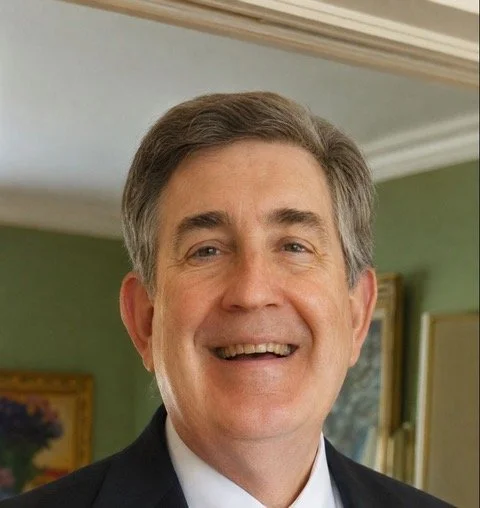
William Ball
Will Ball has held senior positions in both the public and private sectors in a career that spans over 45 years in the Nation’s Capital.
Following six years of active duty in the Navy, Mr. Ball began working in Washington in 1975 on the U.S. Senate staff. For the next ten years, he served in senior staff positions, including as a chief of staff for two former committee chairmen, Senator Herman Talmadge of Georgia and Senator John Tower of Texas. He also served as a professional staff member at the Senate Armed Services Committee.
Subsequently, Mr. Ball joined the Reagan Administration as the Assistant Secretary of State for Legislative Affairs under then Secretary of State George C. Shultz. In 1986, he joined the White House staff and was appointed Assistant to the President for Legislative Affairs, where he served as President Reagan’s chief liaison to the Congress.
In 1988, he was nominated by President Reagan to be the 67th Secretary of the Navy, and was confirmed in March of that year by the Senate. Following completion of the President’s term in office, Mr. Ball moved to the private sector to become head of a national trade association representing major soft drink and beverage companies, and in 2005, he formed a government relations consulting firm. He has served as member of two Congressionally appointed commissions in Washington focusing on the Department of Defense and since 2014 has served as director of the Governor’s Defense Initiative for the Georgia Department of Economic Development.
Ball is a native of South Carolina and a 1969 Navy ROTC graduate of Georgia Tech. After receiving his commission, he served as a Surface Warfare Officer assigned to the guided missile destroyer USS Sellers (DDG-11) for three years before being transferred to duties in the Pentagon. In addition to his business activities, he is a trustee and former chairman of the Asia Foundation, a former trustee of the Maine Maritime Academy, and a former director of the Naval Historical Foundation. He is the recipient of honorary degrees from Furman University and the College of Charleston, and is a member of the Society of the Cincinnati in Maryland.
He and his wife Patty have four grown daughters and five grandchildren and reside in Alexandria, Virginia. They also have a summer place in East Boothbay, overlooking the mouth of Little River. They enjoy that spot with their children and grandchildren.
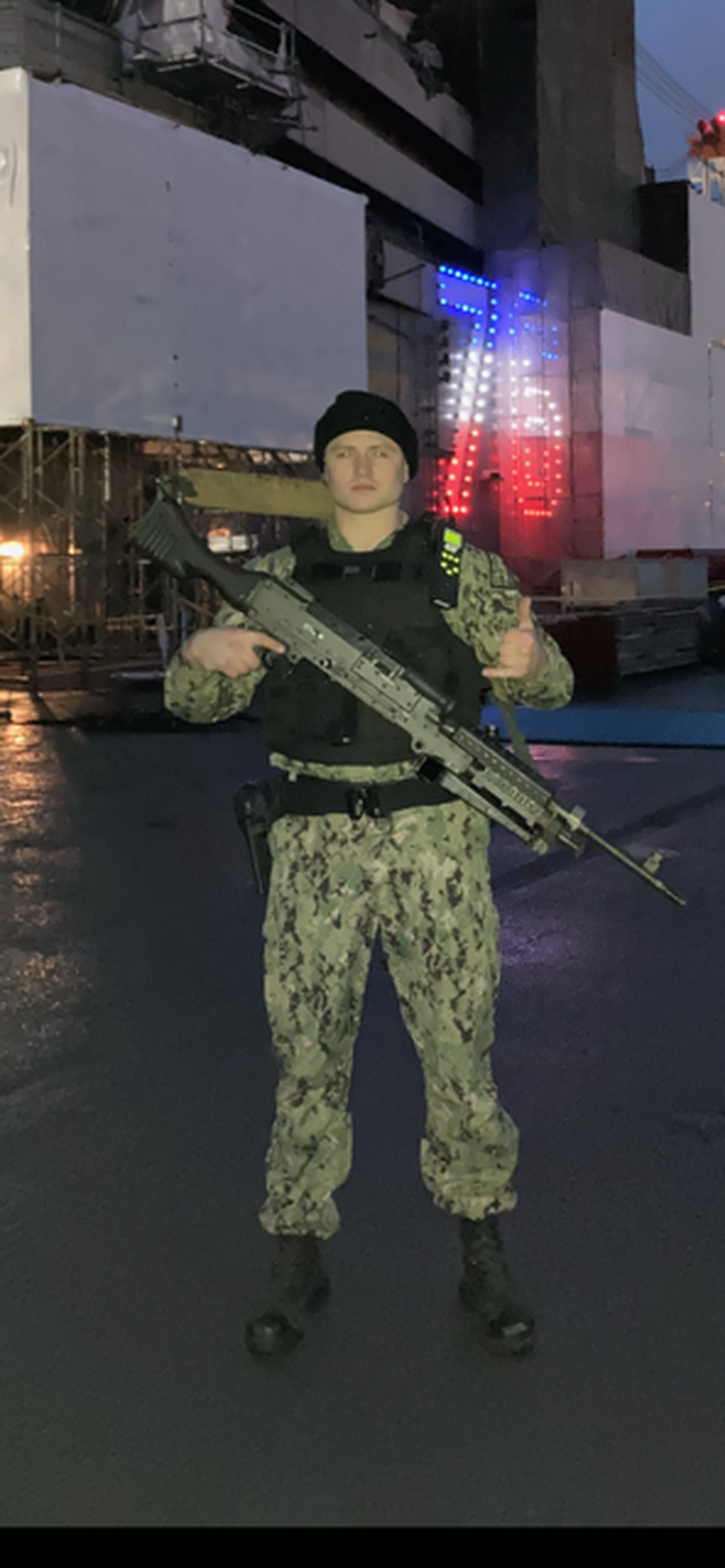
Howard (Howie) Carter
I was motivated to join the US Navy partially because my grandfather, father and uncle were all in the Navy. In addition, I wanted to obtain some skills and life experience, meet some awesome people and secure a future for my family. The pride and honor that came from joining the Navy were just a bonus.
I decided to join the Navy in August 2020, it was a few years out of high school, and I was hauling traps with my dad, which seemed like the best place to be because it was peak covid. While at boot camp we had to wear masks most of the time and I was just glad we didn’t have to wear them when we did physical training.
I am a Master-At-Arms, we are the Military Police for the Navy. After graduating boot camp, I reported to Lackland AFB (Air Force Base) in San Antonio Texas, where I completed by A and C schools for more specific training. From there I reported to the USS Ronald Reagan (CVN 76), a nuclear-powered aircraft carrier, in Yokosuka, Japan. In my three deployments, we traveled to Guam, Vietnam, Singapore, South Korea and the Philippines.
There are a couple of experiences from those deployments that really stand out to me, one was the experience of doing a gun shoot off the side of the ship in the South China and on the 4th of July, we did a swim call and saw a pod of whales breach just a few hundred yards away.
In the Navy, more than anything else, I have learned patience and not to sweat the small stuff as much. It’s given me leadership skills and confidence in areas I was lacking. Spending month at a time away from my wife, family and friends, while working where you live gave me a new appreciation for time and what’s truly important. The exposure to fellow service members and the experiences you share with them certainly expands the mind.
If you are considering a career in the Navy, there’s a saying “choose your rate, choose your fate” and it holds very true. A rate is your rank and your specific job. Before you join up, research exactly what you want to do and where that job may take you. For example, some rates deploy on ships a lot, while others do not. There are a lot of benefits and sacrifices and those two usually coincide.
I am proud to serve in the same Navy as so many brave individuals before me. Thank you all for your service. For all others, you are just as important as anyone else, and despite our differences and the state of the world we are all Americans and on the same team. Wishing everyone a Happy Memorial Day!
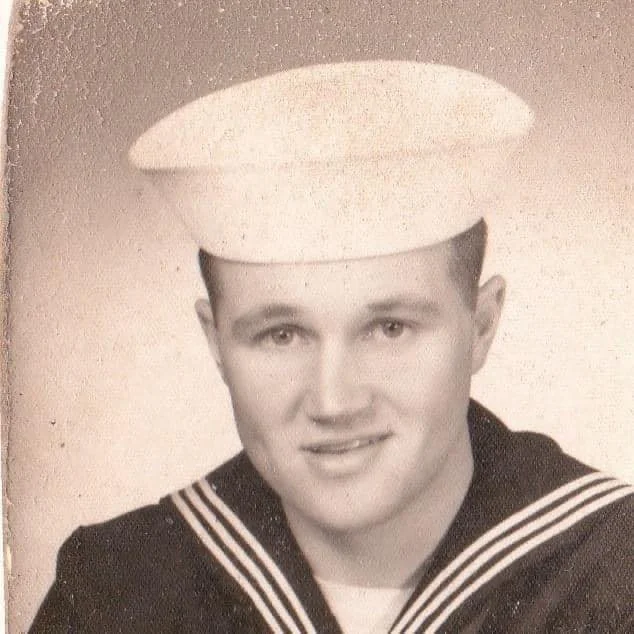
Gary Lewis
Gary Lewis was born and raised in Boothbay, ME. When he was 21 years old and working at his father’s service station, Elm’s Garage, he received a draft letter from the US military. Having grown up by the ocean, the choice was simple—he joined the United States Navy. To him, being on the water felt like home no matter where in the world he traveled.
He spent the next two years as Bosun’s mate on the USS Donner, an LSD20 dock landing ship. While on board, he started with general maintenance work including painting and eventually worked his way up to crane operator. During this time, he went to Personnel School where he learned typing and helped write reports. His focus became writing reports for accidents and deaths involving sailors. He then spent two years with the Helicopter Squadron in Pensacola, FL. During his tenure with the squadron, he was awarded the Sailor of the Month.
During his service he traveled from Norfolk, VA and Orlando, FL to the Mediterranean, France, and Italy. He fondly remembers a personal trip he and a mate took from Nice to Paris to visit his mate’s girlfriend. They took the train and had an opportunity to see the world in a way he otherwise would have never gotten to experience.
When recounting the most defining moment of his military career he was reminded of the uprising in Crete, where they witnessed gunfire, but he recalls there being no imminent danger to his ship. They were there to help evacuate civilians but never went in.
Overall, he credits the Navy with making him a better man and instilling in him a deeper respect for authority and his country. Over the years, he’s kept in touch with the friends he made during his service, providing him a lifetime of camaraderie.
After his four years of service in the Navy, he returned to the peninsula and spent the next 49 years married to his beloved wife, Donna Lewis, who passed away in 2019. He worked for Central Maine Power and Lewis Oil before retiring. Not one to sit idle, he eventually went back to work for Giles Rubbish. He has two daughters, Michelle Farnham and Danelle Davis, 4 grandchildren and 5 great-grandchildren.
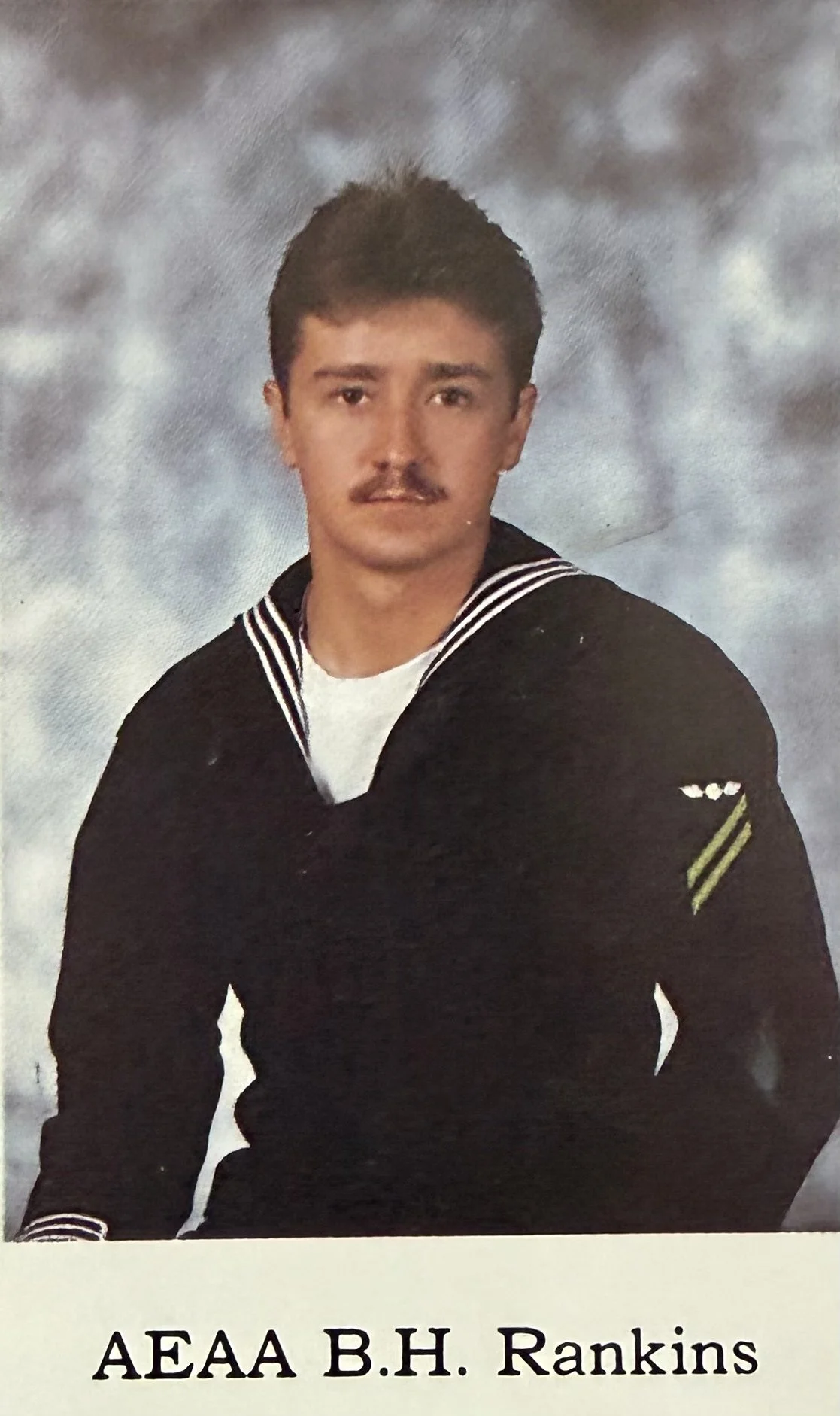
Ben Rankins
I am a proud Navy veteran, and when I trace the map of my life, it always begins in Gardiner, Maine—a place where the river runs steady and memories seem to settle in like morning fog. Back then, the world felt both close and impossibly far away. That changed on May 22, 1987, when I raised my right hand and stepped into the United States Navy, trading familiar roads for open horizons.
Boot camp at Naval Station Great Lakes, Illinois, was the turning point. It was where I learned that discipline is a quiet kind of strength, built one early morning at a time. From there, I went to NAS Memphis, Tennessee, training as an Aviation Electrician’s Mate. I found my rhythm in the circuitry, in the hum of systems that had to work perfectly every time. Later, at NAS Whidbey Island, Washington, I specialized in radar repair and automatic flight control systems, learning the deeper language of the aircraft I would help keep in the sky.
My orders eventually brought me to NAS Norfolk, Virginia, where I was assigned to the USS America (CV-66), serving in the IM-3 division as a Second-Class Petty Officer. Life aboard that carrier was relentless, a world of steel and motion where every day demanded focus. The roar of jets became background music, and the long hours forged bonds that still hold strong.
Those years carried me across the globe. I walked through the ancient echoes of Egypt, stood at the crossroads of Turkey, and felt the coastal breeze of Spain and Portugal. France and England offered moments of quiet reflection, while the Netherlands and Germany revealed their own stories of resilience. I saw the stark intensity of Kuwait and the United Arab Emirates, the vibrant pulse of the Philippines and Singapore, and the easy calm of the U.S. Virgin Islands. Each place was a fleeting chapter, but together they formed a life I never imagined back in Maine.
Desert Storm marked one of the most defining chapters—nine months where the mission was constant and the stakes were real. In those moments, the work I did as an Aviation Electrician’s Mate carried weight. Every system mattered. Every detail counted. It was a time that tested us, but also reminded us why we served.
On March 22, 1992, I was honorably discharged. Stepping away from active duty felt like closing a well-worn book, though the story was far from over. I spent the next five years in the civilian world, carrying with me the skills and discipline the Navy had given me. From 1995 to 2010, I worked as an Electronic Engineering Technician in flight simulation, first at Tyndall Air Force Base in Panama City, Florida, and later at Dobbins Air Reserve Base in Marietta, Georgia. There, I helped in the design and servicing of F-15 and C-130 flight simulators. In a different setting, I was still connected to the same mission—keeping aviation sharp, precise, and ready.
In March of 1997, I returned to service through the Navy Reserves at NAS Dobbins in Marietta, Georgia, continuing until March 23, 2003. It felt like reconnecting with a part of myself that had never really left.
Then life came full circle in a way I never expected. In February 2009, in Atlanta, I reunited with my high school sweetheart and best friend, Lisa (Campbell) Walby—the same woman I had once been engaged to in our early twenties. Time had taken us on separate journeys, but somehow, it led us back to each other. In 2010, we moved to Boothbay Harbor, Maine, returning to the coast and building a life together.
Sixteen years later, here we are. When I look back, it feels like a story written in waves and wires, in distant ports and quiet homecomings. The Navy gave me more than a career. It gave me purpose, direction, and a lifetime of memories. And in the end, it even helped guide me back to where I was always meant to be.
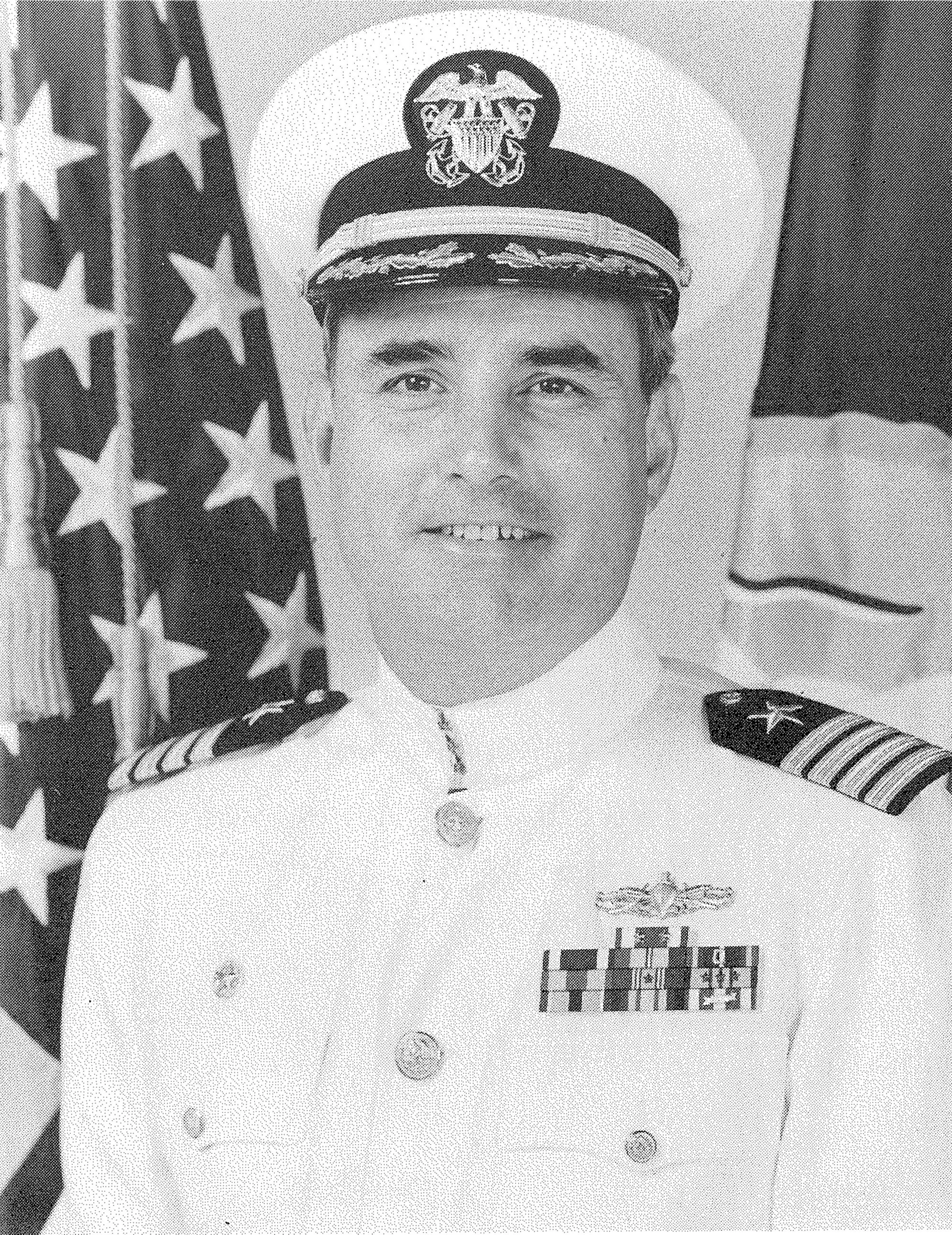
Captain H. Wyman Howard II
My extraordinary Navy journey started very early - I was born during World War II in Georgetown, Washington, D.C. and grew up in a robust Navy family, where my father as well as both grandfathers served in the Navy It did not end there – three uncles served in the Navy, and one of them - Curtis William Howard, Navy Attack Pilot, was lost in World War II in the pacific battle of Midway. My father, grandfather, and two uncles were all graduates of the United States Naval Academy. So, you could say, I was definitely groomed and influenced for eventual Naval service.
When I graduated from Arlington High School in Arlington, Massachusetts, I received a Presidential Appointment from President Kennedy to the United States Naval Academy at the age of seventeen. My Plebe Summer training began in July 1961, and I graduated four years later as a member of the Class of 1965 - a newly commissioned Ensign on 6 June 1965 – that was the beginning of my 34-year Navy career.
My first sea assignment was aboard the destroyer USS ERNEST G. SMALL (DDR 838), forward deployed to Yokosuka, Japan. From 1965 to 1967 the USS Small participated in numerous operations in the South China Sea in support of the Vietnam war. The USS Small was soon reassigned to a homeport in Pearl Harbor, Hawaii; the new homeport resulted in my serendipitous meeting of my lovely wife Susy, a Pan American Airline Stewardess. After a quick six months of dating, we were married in Honolulu at St. Andrews Episcopal Cathedral and we will celebrate are 60th wedding anniversary in May 2027.
In 1968, following Destroyer School, I served as Weapons Officer in USS CHARLES S. SPERRY (DD 697), homeported in Newport, Rhode Island.
After two years in the USS Sperry, and the birth of our first son, HWH III, I attended the Naval Postgraduate School in Monterey, California and earned my master’s degree, in Ocean Physics.
After completing graduate studies, I was assigned as Executive Officer in USS LESTER (DE 1022), forward deployed to Naples, Italy, from1972 to 1974. After two years in Naples, and the birth of our daughter, Anne-Marie, I reported to Washington, D.C. and was assigned as Flag Lieutenant and Naval Aide to Commander, Naval Ordnance Systems Command, this was followed by assignment as Special Assistant and Naval Aide to Commander, Naval Sea Systems Command. From 1975-1977 I was then assigned to the Aegis Shipbuilding Project (PMS 400), where I headed the project team for Aegis/SM2 at-Sea Testing.
Returning to sea in 1978, after the birth of our second son, Kent, I served as Executive Officer in USS DOWNES (FF 1070), followed by assignment to Destroyer Squadron Twenty-one as Chief Staff Officer. In 1981, I returned to Washington, D.C. where I was assigned to the Surface Combat Systems Division (OP 35) in the Office of the Chief of Naval Operations. I performed duties as Program Coordinator for the Aegis Combat System and the ARLEIGH BURKE (DDG 51) Class Combatant. In September 1985, I assumed duties as plankowner Commanding Officer of the Bath Built guided missile frigate USS SIMPSON (FFG 56) – it was an honor and a privilege to command a superb Bath built ship. One of the highlights of my career was being entrusted to assemble and train the crew and bring a new ship to life.
Returning to Washington, D.C., in December 1987 I reported to the Defense Systems Management College where I completed the acquisition management curriculum. In May 1988, I assumed duties as Executive Assistant to Commander, Naval Sea Systems Command. In October 1989, I assumed duties as Deputy Program Manager Aegis Cruiser-Destroyer Shipbuilding Project (PMS 400). At the time, it was the most complex ship-building endeavor in US History and ultimately led to my next command at-sea; building, christening, commissioning, and leading the new Aegis Cruiser – USS ANZIO (CG 68)
Bringing to life a new warship with a crew of four hundred whose average age was twenty and only 66% had ever been to sea before – was an extraordinary opportunity to build the team culture that would result in extraordinary performance and safe operations for over 30 years of the USS ANZIO (CG 68)’s service life.
We established the “Future as Possibility in Team Anzio”:
Possibility of:
- Passionate Leadership. Where leaders love those, they lead and those they lead love their leaders.
- Courageous, high performance.
- Empowering and enabling ourselves as leaders.
- High coordinated action, made possible by our extraordinary relationships with each other.
- Well-being of our families
- Teams maned by self-led individuals who live inside of possibility as a boundless dimension with in which to express their contribution to the Navy and Nation and that their every action shows up as a win for themselves and their families.
- A breakthrough in teamsmanship and what it means to be on a team and a transformation in what the team is committed to.
- Being UN-CONDITIONALLY ready to conduct Prompt and Sustained Combat Operations.
- Mental and Physical readiness to carry out our convictions.
The highlight of my command in both of these two newly commissioned ships was the two weeklong port visits to my summer home on West Harbor Pond in Boothbay Harbor. In both visits, the ship hosted Boothbay Harbor’s town leadership to a short cruise and barbeque on the Flight Deck.
If asked why anyone should consider service in the United States Navy, I would say the Navy would provide the most meaningful foundation for learning and mastering leadership skills, and a sense of purpose which will serve and support them in any endeavor for the rest of their life.
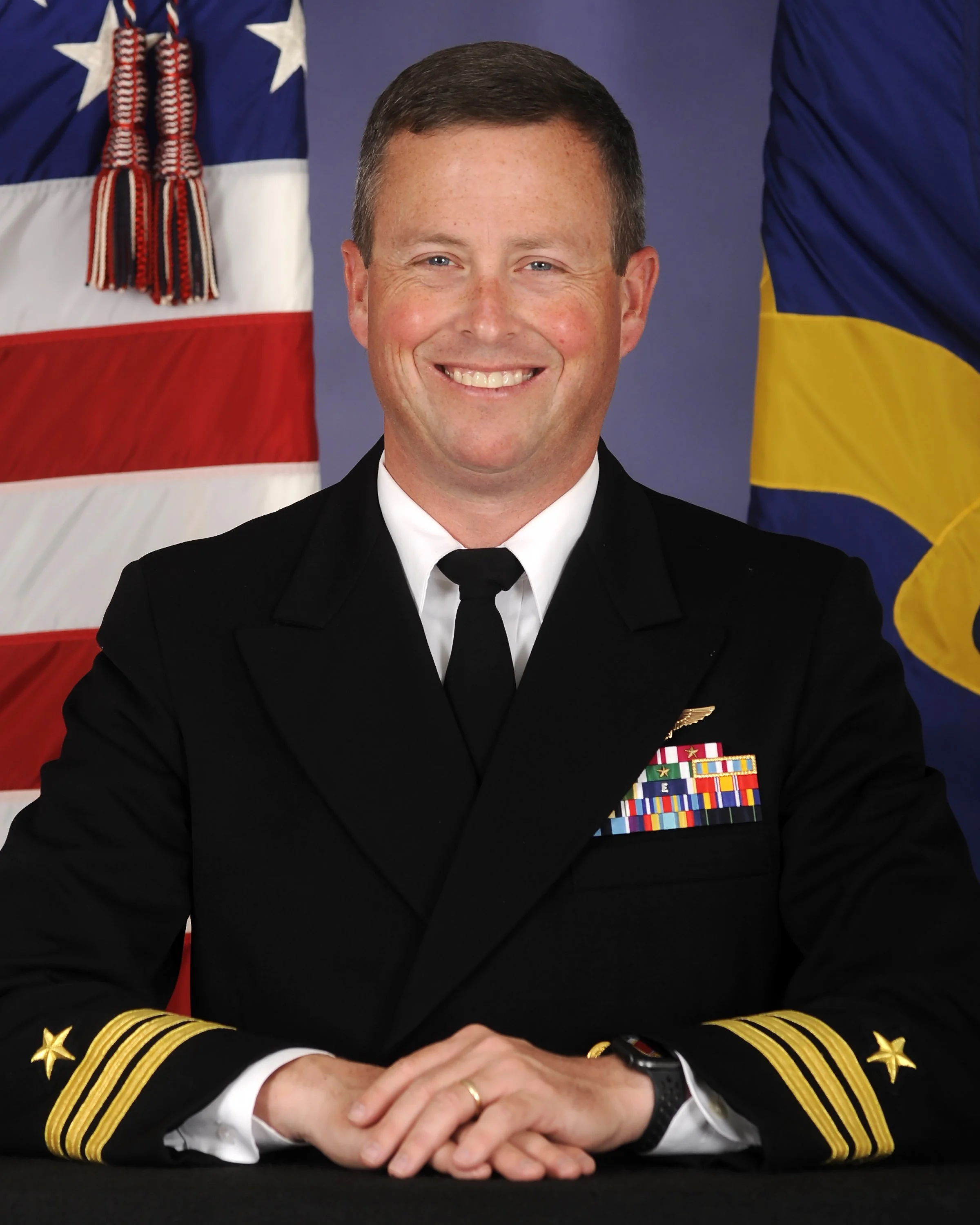
Cmdr. John Walsh
I've always been drawn to flying and the water — the Navy was a natural fit. I graduated from the United States Naval Academy with a degree in Aerospace Engineering, earned my wings as a naval aviator, and eventually made it to the United States Naval Test Pilot School, which remains one of the most rewarding things I've ever done. I also managed to squeeze in a Master's in Systems Engineering from Johns Hopkins somewhere along the way.
I finished my Navy career as the Commanding Officer of Air Test and Evaluation Squadron 20 at NAS Patuxent River — the command responsible for testing the Navy's newest aircraft before they ever reach the fleet. Our job was to put some of the Navy's most important programs through their paces: the P-8A Poseidon, the MQ-4C Triton drone, the E-2D Advanced Hawkeye, and others. Simply put, if a new Navy aircraft or system needed to prove it was ready to fly and fight, this team was the one making that call.
Over more than two decades, I was fortunate to take on some genuinely challenging assignments — deploying to PACOM and CENTCOM Areas of Operations in support of Operation Enduring Freedom and Operation Iraqi Freedom, managing complex weapons and sensor programs, working with the National Reconnaissance Office and DARPA, and serving as Aide to a three-star admiral at Naval Air Systems Command.
After retiring from the Navy, I joined Anduril Industries as Senior Director of Strategic Growth, where I get to keep working on the national security mission — just from a different angle.
My wife Cecily is an active duty Navy Captain and Naval Flight Officer with over two decades of service — and a competitive sailor in her own right. Our son Sawyer is eight and already a serious competitor on the water, racing Optimist sailboats. Our daughter Daphne is a junior at St. George's School in Newport, where she sails at the national level. Needless to say, we spend a lot of time on the water.
Captain Cecily Walsh
CAPT Cecily Walsh is a ‘01 graduate of the United States Naval Academy with a B.S. in Naval Architecture, a Master of Science in Aeronautical Engineering, and a Master of Science Certificate in Systems Engineering. She is a naval flight officer initially in the P-3C & then P-8A.
CAPT Walsh was deployed to EUCOM and CENTCOM Areas of Operations in support of Operation Enduring Freedom and Operation Iraqi Freedom. During her tour she was selected as the Commander, Patrol & Reconnaissance Group East Coast Naval Flight Officer of the Year. She is a graduate of the U.S. Naval Test Pilot School (Class 136). During her follow on test tour in Pax, she selected as the Naval Test Wing Atlantic Test NFO of the Year 2011 for successfully completing the first P-8A torpedo separation launches. Leaving Pax River behind, CAPT Walsh was selected for AST’s Bureau of Naval Personnel, Sea Duty Component in Dallas, TX where she doubled her flight time. At this point she transitioned to an Aerospace Engineering Duty Officer (AEDO). She joined the National Reconnaissance Office where she quickly learned all about space assets while flying a desk as the LSPO Spacecraft Systems IPT. Then she returned back to flying at AST in their D.C. office as the IPT Lead for Production of the Advanced Airborne Sensor (AAS). CAPT Walsh then served as USNA’s Associate Chair of the Aerospace Engineering Department & VOST O-Rep where she encouraged midshipmen to test the limits of the Navy 44 in multiple offshore races helping midshipmen build their personal sea story inventory through highly challenging experiences. During that time, she did not lose a single midshipman and only took two midshipmen to the ER and self-sustained one broken hand. Finally, she has returned to the best team in the Navy as the commanding officer at Advanced Sensor Technologies Program Office where she gets to fly again and deliver advanced technology to the war fighter.
She lives in Annapolis, is married to CDR John Walsh, USN, who is happily retired from the service and enjoys more time in Cecily’s favorite place in Maine. She has a daughter Daphne (17), son Sawyer (8), a terrier named Tiller, a chocolate lab named Rudder, and she continues to let her children ride Bad Pony.